Bodega Garzón: A Complete Guide to Visiting Uruguay's Landmark Winery
Booking a car to Bodega Garzón and booking a visit to Bodega Garzón are two different transactions, and people find that out at the gate. Here is the whole day, from the 1.5-hour drive inland to the granite the winery was built around.
Where the seven hours of a Garzón day actually go
Times are from the operator's published itinerary and are planning allowances, not guarantees. The tasting and any food at the Wine Bar are charged separately from the tour price.
What is Bodega Garzón, and why do visitors plan a whole day around it?
Bodega Garzón is a large modern winery in the hills of Maldonado Department, inland from the Punta del Este coast. It grows Tannat, Albariño, Cabernet Franc and Pinot Noir, works a gravity-flow cellar, and keeps a restaurant and wine bar on site, which is why most visitors treat it as a destination rather than a quick stop. The estate presents itself as a sustainable winery and a world-class icon on its own website, and it backs that up with a visitor operation built for people who arrive intending to stay for hours.
The scale matters more than it first appears. Uruguay is the fourth largest wine producer in South America, with 102,964 tonnes made from 9,023 hectares in 2023 according to the record of Uruguayan wine, and most of that sits in the hills north of Montevideo. Maldonado, the department Punta del Este belongs to, is small by comparison. In the 2013 figures Canelones held 5,046 hectares of vines while Maldonado held 252. One estate can dominate a visitor map when the region behind it is that compact, and Garzón does.
What people actually come for is a combination that Uruguay does not offer anywhere else at this scale: architecture built into the rock, a working cellar you walk through, a fire kitchen, and views over hills that visitors and marketing copy alike keep comparing to Tuscany. The operator running the day trip we list has held the number one position on TripAdvisor for its area for fourteen years running, by its own account, and the tour carries a perfect rating across 441 bookings at the time of writing.
| Item | What the record says | Source |
|---|---|---|
| Location | Garzón, Maldonado Department, inland from the Atlantic coast | The winery's own site |
| Grapes grown | Tannat, Albariño, Cabernet Franc, Pinot Noir | The winery's own site |
| Cellar type | Sustainable gravity-flow system, hand-harvested fruit | Tour operator itinerary |
| Terroir | Granitic soils the operator calls the Mother Rock | Tour operator itinerary |
| On site for visitors | Restaurant, wine bar, enotourism programmes, fire cooking classes, private events | The winery's own site |
| Drive from Punta del Este | About 1.5 hours each way | Tour operator itinerary |
| The tour we list | 7 hours door to door, from $200 per group at the time of writing | Live listing |
None of that makes the visit automatic. The rest of this guide is about the mechanics, because the mechanics are where people lose a day. If you want the wider regional picture first, our companion piece on Tannat and the wine country behind the coast covers the grape and the alternatives to Garzón.
Where is Bodega Garzón, and how long does the drive really take?
Bodega Garzón sits inland in the Maldonado hills, and the guided day trip allows about 1.5 hours of driving each way from Punta del Este, La Barra or José Ignacio. Our own pricing notes describe the Garzón wine area as roughly 30 km north of Punta del Este, which tells you the road matters more than the map distance.
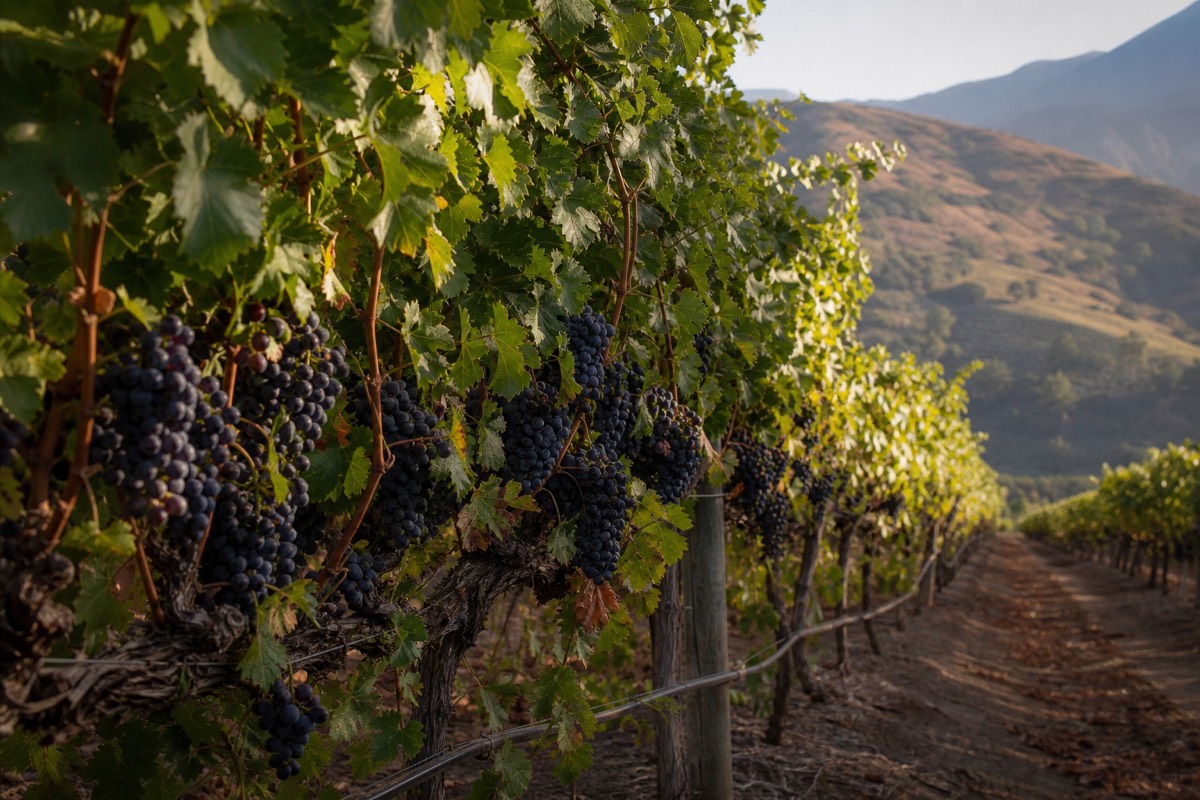
That gap between distance and time is the first thing to plan around. The route leaves the resort strip quickly and runs through rolling country, and it is a rural drive rather than a motorway run. The operator treats the transit as part of the experience rather than dead time, which is a fair framing on the way out and a slightly generous one on the way back after a tasting.
Pickup is flexible along the coast, and where you start affects how much of your morning disappears. Most guests are collected from the Enjoy Punta del Este Resort, which functions as the default meeting point, but direct pickup from La Barra, Manantiales and José Ignacio is offered on the same booking. If you are staying east of the bridge, that saves you a double-back into town.
| Starting point | How the operator handles it | What it means for your morning |
|---|---|---|
| Enjoy Punta del Este Resort | The default meeting point for most guests | Easiest option if you are on the peninsula or nearby |
| Punta del Este hotels | Private pickup from your location | 10:00 departure, so no early start needed |
| La Barra | Direct pickup offered | You skip the drive back into town, useful if you are staying past the bridge |
| Manantiales | Direct pickup offered | Similar saving to La Barra |
| José Ignacio | Direct pickup offered | The furthest east pickup, worth confirming timing on WhatsApp the day before |
The bridge crossing is part of the run if you are staying east of town, and it is the same wavy structure covered in our guide to La Barra and its bridge. If your base is further along the coast, a day spent in José Ignacio pairs naturally with the same stretch of road, though not on the same day as this one.
What is the granite Mother Rock terroir, in plain language?
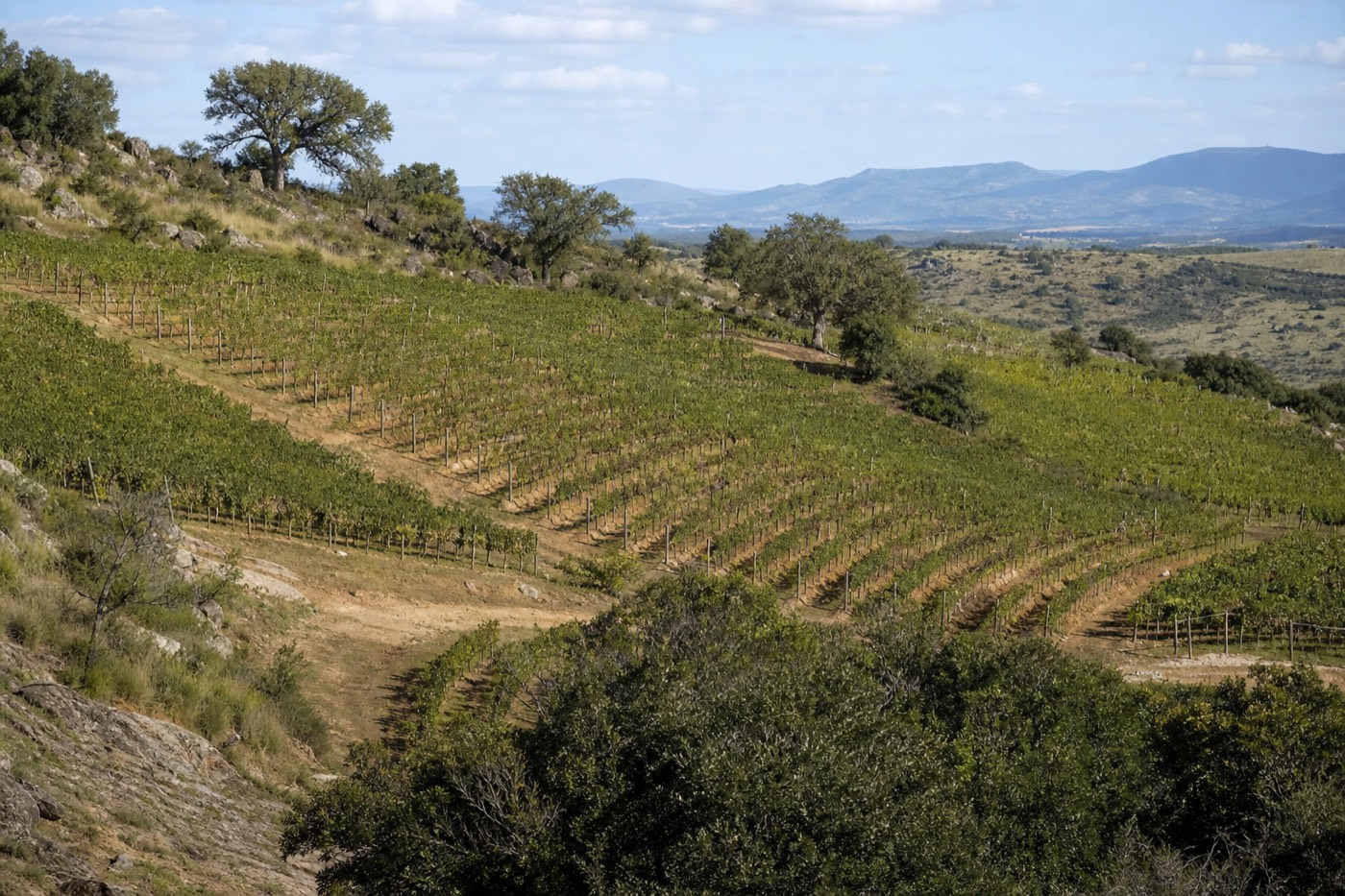
The Garzón vineyards sit on granitic soils, and the estate has made that geology part of the architecture, with exposed rock inside the building itself. The practical effect of granite is shallow, free-draining, low-fertility soil, which stresses vines, keeps yields down and concentrates what ends up in the glass.
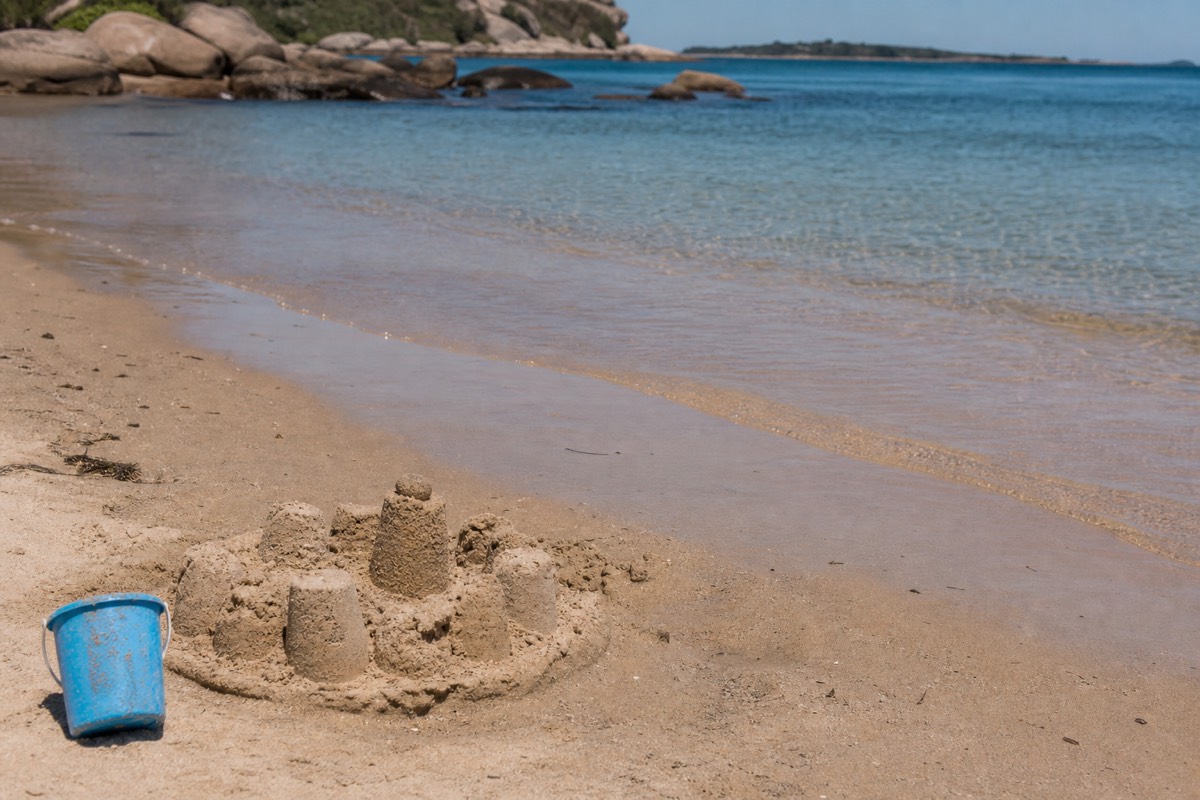
Here is the plain version of why anyone mentions rock at all. Deep, rich soil grows big, happy vines that produce a lot of dilute fruit. Thin soil over hard rock does the opposite. Water drains away instead of pooling, roots go down looking for it, the vine puts less energy into leaves and more into a smaller crop, and the berries that survive carry more skin relative to juice. Skin is where colour, tannin and aroma live in a red grape, so a hard site tends to give a darker, firmer wine from the same variety.
The operator copy goes further and calls this among the oldest granitic soil in the world, putting the rock at around 2,500 million years, and it points visitors toward a cutout in the winery building where the granite has been left exposed. Treat those figures as the estate's own framing rather than something we have independently verified. What is verifiable is the ask: if you go, request to see the exposed rock inside the building. It takes two minutes and it is the one detail that makes the terroir talk land instead of washing over you.
The coastal position works alongside the soil. This is one of the few wine districts in South America that sits close enough to the Atlantic for the ocean to moderate the temperature, which slows ripening and holds acidity. That combination, hard granite plus sea air, is the argument for growing wine here rather than in the established heartland north of Montevideo.
What actually happens on a Bodega Garzón visit, step by step?
The 7-hour tour runs as three phases: a 10:00 pickup and 1.5-hour drive inland, roughly four hours on the estate covering a guided group tour of the gravity-flow cellar and vineyards plus free time at the Wine Bar, then the return transit to your original pickup point.
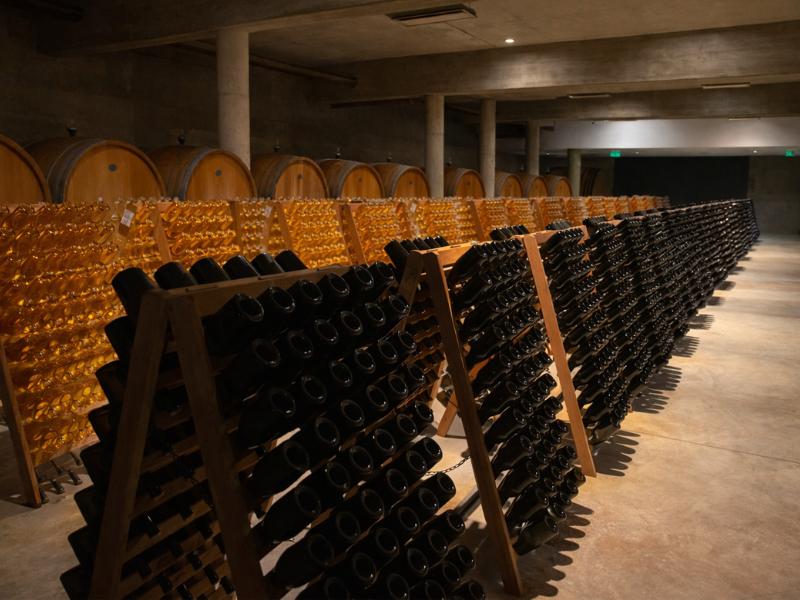
The middle phase is where the day is won or lost. The itinerary describes a guided tour of the production facilities, an explanation of the gravity-flow system and the granite terroir, and a session in the aging cellars covering the hand-harvested winemaking. After that, the estate's Wine Bar takes over, and you are on your own clock.
One honest note on the numbers, because the listing wording invites a misread. The tour advertises four hours of leisure time and a total duration of seven hours. Three of those seven hours are transit. That leaves four hours on the property in total, and the guided cellar and vineyard tour happens inside that window, not on top of it. The 7-hour itinerary leaves roughly four hours on site with a guided portion inside it, not four hours of unstructured time after a tour.
| Approximate time | What happens | Worth knowing |
|---|---|---|
| 10:00 | Private pickup in Punta del Este, La Barra, Manantiales or José Ignacio | Timing is confirmed by WhatsApp, so keep the phone on |
| 10:00 to 11:30 | Scenic drive inland through the Maldonado hills | Private vehicle, so stops and pace are negotiable with the driver |
| From arrival | Group tour of the state-of-the-art facilities and the gravity-flow cellar | The winery tour itself is a shared group experience with an estate host |
| Mid visit | Aging cellars and the hand-harvested winemaking story | Ask here to see the exposed granite inside the building |
| Remaining estate time | Wine Bar, tasting, food if you want it, and the views | Anything you eat or drink here is paid directly |
| Around 15:30 | Departure for the coast | Nobody in your party has to drive, which is the point |
| Around 17:00 | Back at your original pickup point | Leaves the evening free on the peninsula |
The transport is private, the winery tour is not. That distinction surprises people who booked a private day and expected a private cellar walk, so set expectations before you go. If you want the whole day private and shaped around your own list rather than an estate schedule, the fully flexible private day on the peninsula is a different product entirely.
Do you have to pre-book the tasting, or can you just turn up?
Book the visit and tasting in advance, not just the transfer. The operator's own notes state that entry to the property often requires a confirmed tasting reservation, and the tour's inclusions list snacks with the tasting as excluded unless pre-booked. Booking a ride to Garzón is not the same thing as booking a visit to Garzón.
This is the single most useful thing in this guide, so it gets its own section. There are two separate transactions in a Garzón day. One is the transport and the driver, which is what a transfer product sells. The other is the estate's own visitor experience, which the winery manages against a daily capacity. If you only arrange the first, you can end up standing at a gate that is expecting a name it does not have.
The 7-hour Garzón tour can arrange the tasting for you. The tour's own FAQ answers the question directly: book the "Visit and Tasting" option, and if you have only booked the transfer, the tasting needs to be arranged separately, which the operator will assist with. Say the words when you book. Ask for written confirmation that the estate reservation exists, not just the pickup.
Season sharpens this. Our own advance-booking notes for this site say the Garzón tasting slots fill from high-season visitors booking weeks ahead, and that the winery is not a same-day product between December and February. The operator's guidance is at least four weeks ahead for the February and March harvest window.
| Element | In the 7-hour tour price? | What to do about it |
|---|---|---|
| Private round-trip transport | Yes | Nothing, it is the core of the booking |
| Group tour of cellar and vineyards | Yes | Nothing |
| Expert wine host at the winery | Yes | Nothing |
| WhatsApp coordination of timings | Yes | Keep your number reachable and reply the day before |
| The tasting itself | Only on the Visit and Tasting option | Book it explicitly, ask for confirmation |
| Snacks with the tasting | No, unless pre-booked | Add it at booking if you want food with the pour |
| Lunch at the Wine Bar | No | Paid directly on site, reserve a table if you want the restaurant |
| Wine shipping fees | No | Ask about current shipping terms at the shop |
| Gratuities for driver and host | No | Carry a little cash |
| Travel insurance | No | Your own arrangement |
What does a day at Bodega Garzón actually cost?
The tour is listed from $200 per group at the time of writing, not per person, and that covers transport and the guided estate visit. The tasting, any food and anything you buy are separate. Check the live listing for current pricing before you plan around a number.
The per-group structure changes the maths in a way that is easy to miss. A couple splitting a group-priced transfer pays less per head than two people each buying a per-person wine tour. A solo traveller pays the whole thing alone. So the same headline price behaves very differently depending on how many of you there are.
On top of the transport sits the estate's own charge. Our own published notes for this site put standard Garzón tasting experiences in a range of roughly $60 to $120 per person depending on the level of the experience, described as approximate and current for the 2025 to 2026 window, with the instruction to confirm at booking because they vary by season and group size. That is a planning band, not a quote.
| Line item | Who you pay | Planning allowance in our own voice |
|---|---|---|
| 7-hour tour with private transport | Booked online in advance | From $200 per group at the time of writing |
| Visit and tasting at the estate | The winery, arranged through the operator | Our notes put standard tastings roughly in the $60 to $120 per person band, confirm live |
| Lunch at the Wine Bar or restaurant | Paid directly on site | Allow for a full restaurant meal if you sit down, less if you graze |
| Bottles to take home | The estate shop | Set a limit before the tasting, not after |
| Shipping a case | The estate, fees separate | Ask about current terms rather than assuming any offer applies to you |
| Tips for driver and estate host | Cash on the day | At your discretion, small notes are enough |
Read the total honestly. A wine day at Garzón is not a $200 day for two people once the tastings and a meal are in. It compares reasonably against a restaurant evening on the peninsula, and it looks expensive next to a beach afternoon. Our piece on how far your money goes in Punta del Este sets the wider context.
Can you eat at Bodega Garzón, and should you build the day around lunch?
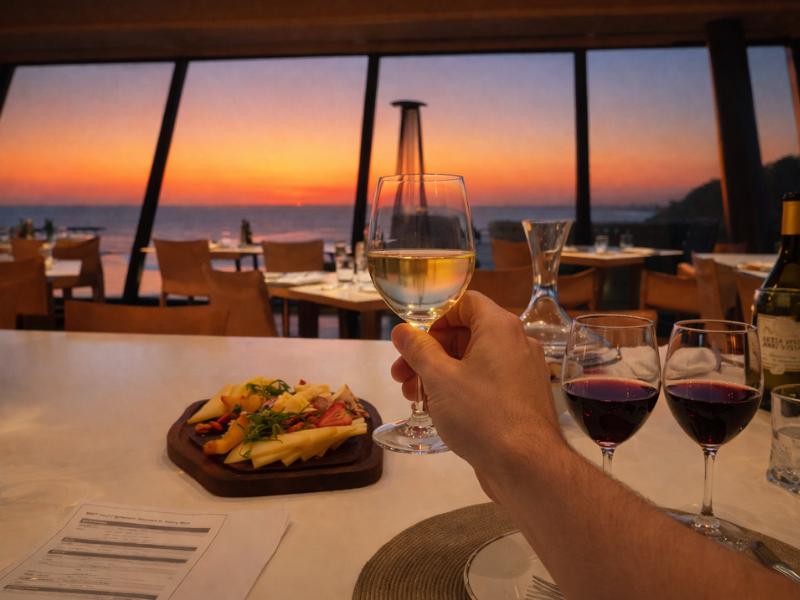
Yes. The estate runs a restaurant and a wine bar and even offers classes in cooking with fire, all listed on its own site. Lunch is not included in the tour price and is paid directly. Whether to build the day around it depends on how much of your four hours on site you are willing to spend seated.
The operator's own notes call the kitchen a highlight and describe it as influenced by Uruguay's open-fire cooking tradition. That tradition is not decorative here. Cooking over live fire is the regional culinary signature across the River Plate, and an estate that teaches it as a class is not treating the restaurant as an afterthought.
Now the arithmetic. You have around four hours on the property, and the guided cellar and vineyard portion sits inside that. A proper restaurant lunch with wine takes a meaningful bite out of what remains. Our team's read is that there are two coherent plans and one bad one. Plan A: do the guided tour, then sit down for a full lunch, and accept that you will not wander much. Plan B: do the guided tour, eat lightly at the Wine Bar, and use the rest of the time on the tasting, the shop and the views. The bad plan is arriving without deciding, discovering the restaurant is full, and eating a rushed plate while the driver waits.
If you want the restaurant, reserve it when you arrange the tasting. Same conversation, same booking, one message.
Should you self-drive to Garzón or take a guided tour?
The honest answer is that self-driving to a wine tasting creates a problem the tasting cannot solve. Someone has to drive 1.5 hours back to the coast in the afternoon. A guided tour removes that person from the equation, which is the clearest practical argument for booking transport rather than renting a car.
This is not a moral lecture, it is a planning constraint. Uruguay's roads are good and the coastal driving is easy. The issue is the specific shape of this day: a long rural drive out, several hours of pouring, and a return in the late afternoon. If one of you volunteers as the designated driver, that person has paid for a wine experience they cannot fully take part in. If nobody volunteers, you have a much worse situation.
The operators we work with treat this as a selling point rather than a warning, and fairly so. The boutique four-hour tour's own copy points out that the format removes the need for a sober driver in your party. The Garzón day does the same thing with a private vehicle across a longer distance.
| Option | Roughly what it costs | Who it suits | The catch |
|---|---|---|---|
| Rental car, self-drive | Car hire plus fuel, tasting paid separately | Groups where one person genuinely does not drink | Your driver misses the point of the trip, and the return leg is after the tasting |
| The 7-hour Garzón estate day | From $200 per group at the time of writing | Couples and small groups with a full free day | Three of the seven hours are transit, and the tasting is booked separately |
| The 4-hour boutique winery run | From $200 per person at the time of writing | Half-day visitors and cruise passengers | Per person pricing, and it is not Garzón |
| Private custom day on the peninsula | From $280 per group at the time of writing | People who want beaches, art and a winery in one flexible day | Longer at 10 hours, and the itinerary is yours to design |
The choice is really about how much of your holiday you are prepared to spend in a vehicle. Three hours on the road buys you the landmark estate. Less road buys you something smaller and closer.
When is the best time of year to visit Bodega Garzón?
February and March is the harvest window, the period with the best chance of seeing hand-harvesting and fruit at full maturity, and it needs booking at least four weeks ahead. October to December gives green hills and spring growth. April to June is the quiet season for unhurried cellar visits.
Uruguay is in the Southern Hemisphere, so the calendar inverts everything a European or North American visitor expects. The vines bud in spring from around October, the fruit ripens through the southern summer, and the picking happens at the end of that summer while the beaches are still busy. Winter, from June, is the cellar and shop season rather than the vineyard season.
Set that against the resort calendar and a tension appears. The site's own standing advice is to visit Punta del Este in March or November rather than January, because the high season from late December through February brings packed beaches and prices 30 to 60 percent higher. March happens to sit inside the harvest window and outside the worst of the crowds, which makes it the single strongest month for a visitor who cares about both the coast and the vineyard.
| Window | Months | What you are likely to see | Trade-off | Booking lead time |
|---|---|---|---|---|
| Harvest peak | February to March | Hand-harvesting in progress, fruit at peak maturity | Highest demand of the year for tasting slots | At least four weeks ahead |
| Scenic bloom | October to December | Green hills and spring growth across the vineyards | Moderate temperatures, less winery activity to watch | Book ahead from November as the shoulder fills |
| Quiet window | April to June | Calm, unhurried cellar visits with few other groups | Cooler and breezier, the vineyard itself is bare | Shorter notice usually works |
| Deep winter | June to August | Cellar and shop focus rather than vines | Coldest, and the coast is out of season around it | Least constrained |
Our wider month-by-month read on when to visit Punta del Este handles the beach side of the same decision, and the two align more often than not.
Which Garzón wines are actually worth your tasting slots?
The estate lists four varieties on its own site: Tannat, Albariño, Cabernet Franc and Pinot Noir. Tannat is the one to prioritise, because it is Uruguay's national grape and accounts for 36 percent of the country's plantings. Albariño is the interesting white, brought to Uruguay from Galicia in 1954.
Tannat first, in terms of why you came. The variety originated in southwest France, in the Madiran area near the Pyrenees, and reached Uruguay with Basque settlers in the nineteenth century, particularly through Don Pascual Harriague, according to the record of the Tannat grape. French Tannat is known for very high tannin and firm structure. Uruguayan Tannat is described as softer and more elegant in tannin with blackberry fruit, lighter in body and lower in tannin than Madiran. If you have tried Tannat somewhere else and found it punishing, the Uruguayan version is not the same animal.
Albariño deserves the second slot, and not because it is fashionable. It arrived in Uruguay in 1954 with immigrants from A Coruna in Galicia, which is another Atlantic coast with a cool maritime climate, and that lineage is the argument for growing it on a shore-influenced site like this one. Cabernet Franc and Pinot Noir round out the estate's list. We are not going to invent tasting notes for wines we have no verified record of, so treat those two as worth asking the host about rather than pre-judging.
| Grape | Where it comes from | Status in Uruguay | What the record supports |
|---|---|---|---|
| Tannat | Madiran, southwest France, near the Pyrenees | National grape, 36 percent of plantings | Uruguayan versions run softer and lighter than French Madiran, with blackberry fruit |
| Albariño | Galicia, northwest Spain | Arrived 1954 with immigrants from A Coruna, now Uruguay's headline white | Documented arrival and rising international attention |
| Cabernet Franc | France | About 4 percent of national plantings | Grown at Garzón per the estate's own site |
| Pinot Noir | Burgundy, France | Used as a blending partner for Tannat in Uruguay | Grown at Garzón per the estate's own site |
A practical order for the pour: whites before reds, and leave the Tannat reserves until last. The operator's own guidance is to try the reserve bottles even if you normally reach for lighter reds, on the basis that the modern Uruguayan style is more refined than the grape's reputation suggests.
Can you buy wine at Garzón and get it home?
Yes, there is a shop and shipping is possible, but shipping fees are not part of the tour price. The operator notes that the estate frequently offers free shipping to the United States on case purchases, which is worth asking about at the shop rather than counting on before you travel.
The reason this matters is simple luggage arithmetic. Uruguayan wine is not widely distributed in most home markets, so the bottles you taste at the estate may genuinely be hard to find later, and that pushes people toward buying more than they can carry. Airline weight limits, breakage risk and your own customs allowance all argue against filling a suitcase.
Ask three questions at the shop. Does the estate ship to your country at all. What does it cost today, since offers change by market and season. And what is the minimum, since case-level purchases and single bottles are usually treated very differently. Get the answers before you commit to a mixed case in the enthusiasm of a tasting.
If shipping does not work for your destination, the fallback is a single special bottle in hand luggage where permitted, or wrapped carefully in checked baggage. That is a much smaller decision than a case, and it survives a long flight better.
Who should visit Garzón, and who should book the shorter boutique tour instead?
Garzón suits visitors with a full free day, an interest in architecture and scale, and a party of two or more to split the group price. Anyone with only half a day, a cruise ship departure to meet, or a preference for small family operations is better served by the four-hour boutique winery tour.
Be honest about the day's shape before you book. Seven hours with three of them in a vehicle is a real commitment on a short trip. If Punta del Este is a two-night stop, giving one whole day to a winery inland is a big share of the total. Our piece on how many days Punta del Este actually needs is worth reading before you decide.
There are also accessibility limits worth stating plainly. The Garzón day is listed as not wheelchair accessible, and infant seats are available on request rather than by default. For travellers with mobility constraints, the shorter format or a fully private custom day gives more room to adapt.
| If you are | Better pick | Why |
|---|---|---|
| A couple with a whole free day | The Garzón estate day | Group pricing splits well and the estate rewards a long stay |
| Interested in architecture and winemaking technology | The Garzón estate day | The gravity-flow cellar and the exposed granite are the reason to come |
| A cruise passenger with a fixed all-aboard time | The 4-hour boutique winery tour | It is built to fit a shore-excursion window and returns to the port |
| Working with a half day only | The 4-hour boutique winery tour | Less road, more time actually tasting |
| After intimacy rather than scale | The 4-hour boutique winery tour | A small family-run vineyard with artisanal cheese, and no extra fees on top |
| Travelling solo on a budget | The 4-hour boutique winery tour | Group pricing on the Garzón day works against a single traveller |
| Wanting beaches, art and wine in one day | A private custom day on the peninsula | You design the stops, including Casapueblo and the port |
Whichever way you go, book the estate side and the transport side as one arrangement. That is the difference between a wine day and a long drive. The full range sits on our guided tours of Punta del Este, alongside the coastal options for the days you would rather stay by the sea, and our guide to Casapueblo at Punta Ballena covers the other landmark most people pair with a wine trip.