La Barra, Uruguay: The Wavy Bridge, the Beaches and What to Do
Ten kilometres east of the Punta del Este peninsula, the coast road crosses the Maldonado River on a bridge that deliberately refuses to lie flat. The wave is the hook. The village on the far side is the reason to stay.
Fitting the peninsula and La Barra into one Sunday
Timings are our own planning allowance for a Sunday in the shoulder season. Expect everything to run longer in January and February.
Where is La Barra and how long does the drive take?
La Barra sits about ten kilometres east of the Punta del Este peninsula, on the far side of the Maldonado River. The undulating Leonel Viera bridge carries the coast road across the river mouth and drops you straight into the village, which makes this the shortest worthwhile excursion anywhere on this coast.
Ten kilometres is close enough that La Barra functions as an extension of Punta del Este rather than a separate trip. You can be there in a quarter of an hour outside peak weeks, and in January you can also sit in traffic for considerably longer than that, because everybody on the coast is using the same single road at the same times.
The river crossing is what gives the village its identity and its name. West of the bridge you have the peninsula, the towers and the marina. East of it the coast turns into a straighter Atlantic frontage that runs on through Manantiales and eventually reaches the small lighthouse village at the far end of Route 10. La Barra is the hinge between those two versions of the coast, and it borrows a little from each.
Administratively this is all Maldonado Department, 4,793 square kilometres with 212,951 inhabitants recorded in 2023, whose southern coastal strip has been built on tourism since the 1950s. La Barra, Punta del Este, Punta Ballena and José Ignacio are all named among the department's tourism centres, which is a useful reminder that this is one continuous resort coast rather than a string of unrelated towns.
| How you get there | Time from the peninsula | Works well when | Watch out for |
|---|---|---|---|
| Own or hired car | Roughly fifteen minutes off-peak | You want to stop at the bridge and stay flexible | Parking in the village on a summer Sunday |
| Taxi or ride app | Similar, no parking problem | You plan to eat and drink in La Barra | Return trips late at night in high season |
| Private guided day | Built into a wider circuit | You want the coast explained rather than just driven | Check the itinerary actually names the bridge |
| On foot or by bike from the peninsula | Not realistic as a day plan | Never, for a visitor on a short trip | Ten kilometres each way on a busy coast road |
| As a pass-through on a wine tour | Minutes, you cross and keep going | The winery is the day and the bridge is a bonus | You will not get time in the village itself |
What is the Leonel Viera bridge and why does everyone photograph it?
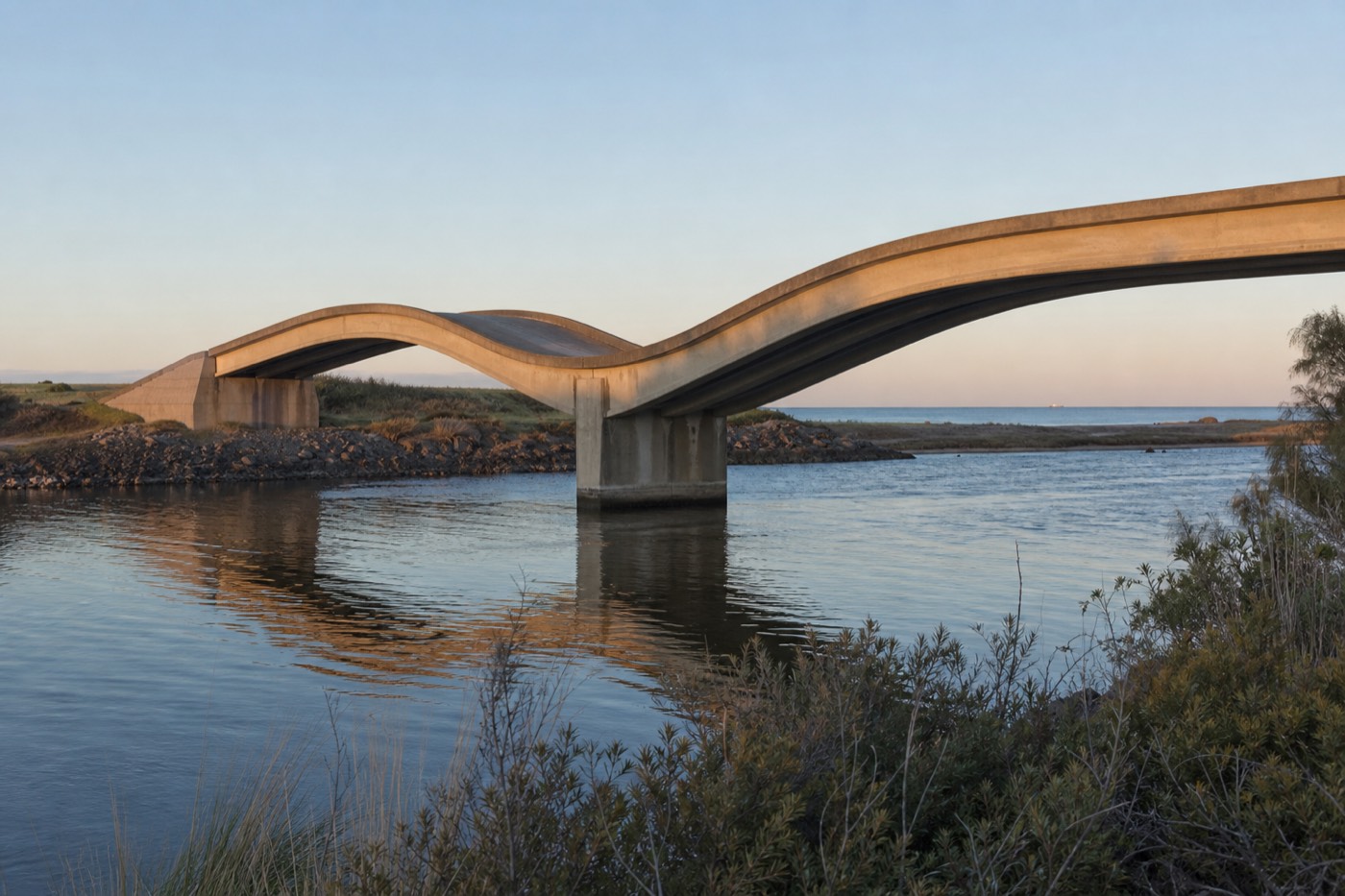
The Puente de la Barra is an undulating stressed-ribbon crossing over the Maldonado River. Instead of running flat, the deck dips and rises, so vehicles get a small, genuine stomach-drop as they cross. That combination of unusual engineering and a photogenic river mouth setting makes it the most photographed structure on this coast.
Most bridges try very hard to be level. This one does the opposite, and the sensation it produces is the whole reason it has become a landmark rather than a piece of infrastructure. Drivers who know it slow down at the right moment so passengers feel the dip properly, and the private tour that names the crossing treats that dip as part of the day rather than an accident of the route. One of them describes crossing it in both directions as the only way to get the full effect, which is a fair point given how short the crossing is.
The setting does as much work as the structure. You are crossing where the Maldonado River meets the coast, so the water below is broad and calm, with small boats moored along it and the restaurant and café frontage of La Barra visible on the far bank. Look one way and there is river; look the other and there is the Atlantic. Very few road bridges hand you both.
It is free, it is open at all hours, and it takes five to fifteen minutes as a stop. That is a very high return on time invested, which is why the bridge works better as a stop on a wider private day you shape yourself than as a destination that justifies its own excursion.
How do you photograph the wavy bridge properly?
Shoot it from the riverbank rather than from the deck. Standing on the bridge you cannot see the undulation, because you are inside it. From the bank to one side, in low-angle light, the dip and rise of the deck reads clearly against the water and the far shore, and that is the picture people actually want.
This is the single most common mistake visitors make here. They stop mid-span, take a photograph along the road, and get a picture of a road. The wave is only legible in profile, so the useful vantage points are on the ground beside the river, looking across the structure rather than down it.
Light matters as much as position. Late afternoon into golden hour is the window our own coastal advice keeps returning to, and it applies here for the same reason it applies at the white cliffside compound west of town: low sun rakes across the surfaces instead of flattening them from overhead. Midday in January gives you hard shadow, glare off the water and a great many other people doing the same thing.
One more practical note. In high season the bridge carries heavy traffic and sees long queues of visitors doing exactly this, so the calm-water reflection shots are easier early in the morning or on a weekday. On a Sunday you are trading a quieter photograph for a much better day out, which is usually the right trade.
| When you shoot | Where to stand | What you get | Trade-off |
|---|---|---|---|
| Early morning | Riverbank, side-on to the deck | Still water, clean reflections, almost nobody | Flatter light, the village is still asleep |
| Midday, high season | Anywhere you can park | The record shot and little else | Glare, hard shadow, traffic and crowds |
| Golden hour | Riverbank, sun behind you | The undulation reads clearly, warm tone | The busiest photography window of the day |
| After dark | Riverbank with a steady surface | Lit deck reflected in the river | Needs a long exposure and a firm rest |
| From inside the car | The deck itself | The stomach-drop, not the shape | You cannot see the wave from on top of it |
Why does our team tell clients to plan La Barra for a Sunday?
Because the artisan market only runs on Sundays. The bridge is free and open every day, but on its own it is a short detour rather than a destination. Add the Feria Artesanal along the main road, running from mid-morning to sunset with jewellery, leather, ceramics and street food, and the visit becomes a proper half day.
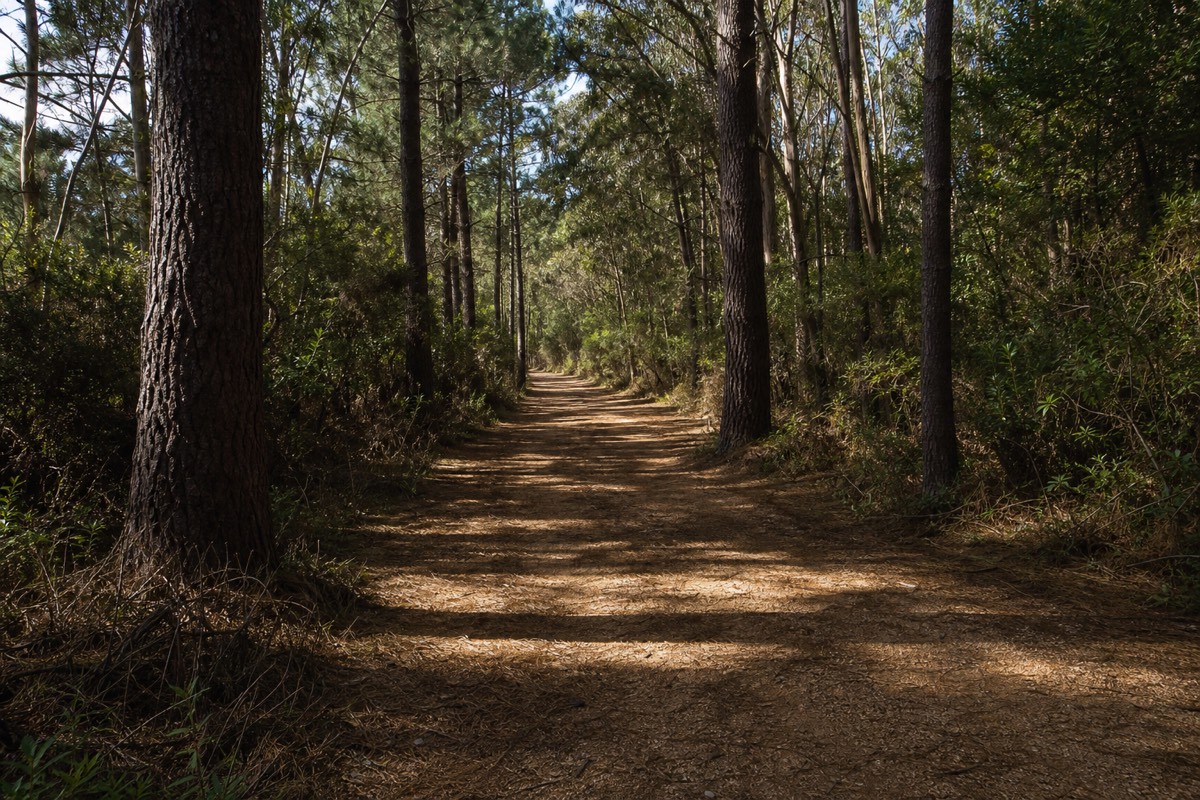
This is one of the pieces of advice we give first-timers before anything else, and the reasoning is arithmetic rather than atmosphere. A weekday visit to La Barra gives you a fifteen-minute bridge stop and a quiet village with most of its interest closed or subdued. A Sunday visit gives you the same bridge, plus several hours of market, plus the crowd and the music and the street food that come with it. Same drive, several times the content.
The market itself sits along the main road through the village, which means it and the bridge are minutes apart on foot. That proximity is what makes the combination work as one outing rather than two errands. Our own published guidance puts it plainly: Sunday is the only practical day to do both, and the market runs from mid-morning until dusk.
There is a second-order benefit. Because the market pulls people east on a Sunday, the peninsula's own beaches and streets are marginally calmer that day, so a Sunday split between the two gives you a better version of each. If you are only in the region briefly, our guide to which months and days work best on this coast puts the Sunday rule in the wider seasonal picture.
| Sunday | Monday to Saturday | |
|---|---|---|
| Artisan market | Open, mid-morning to sunset | Closed |
| The bridge | Open, busier, still easy to photograph | Open, very quiet, easiest photography |
| Shops and galleries | The strongest day of the week | Patchy, and thinner outside high season |
| How long the visit justifies | Three to five hours | Thirty to ninety minutes |
| Traffic on the coast road | Heaviest of the week in January | Lighter, especially early |
| Our read | The complete version of La Barra | A pretty stop on the way somewhere else |
What is there to do in La Barra beyond the bridge?
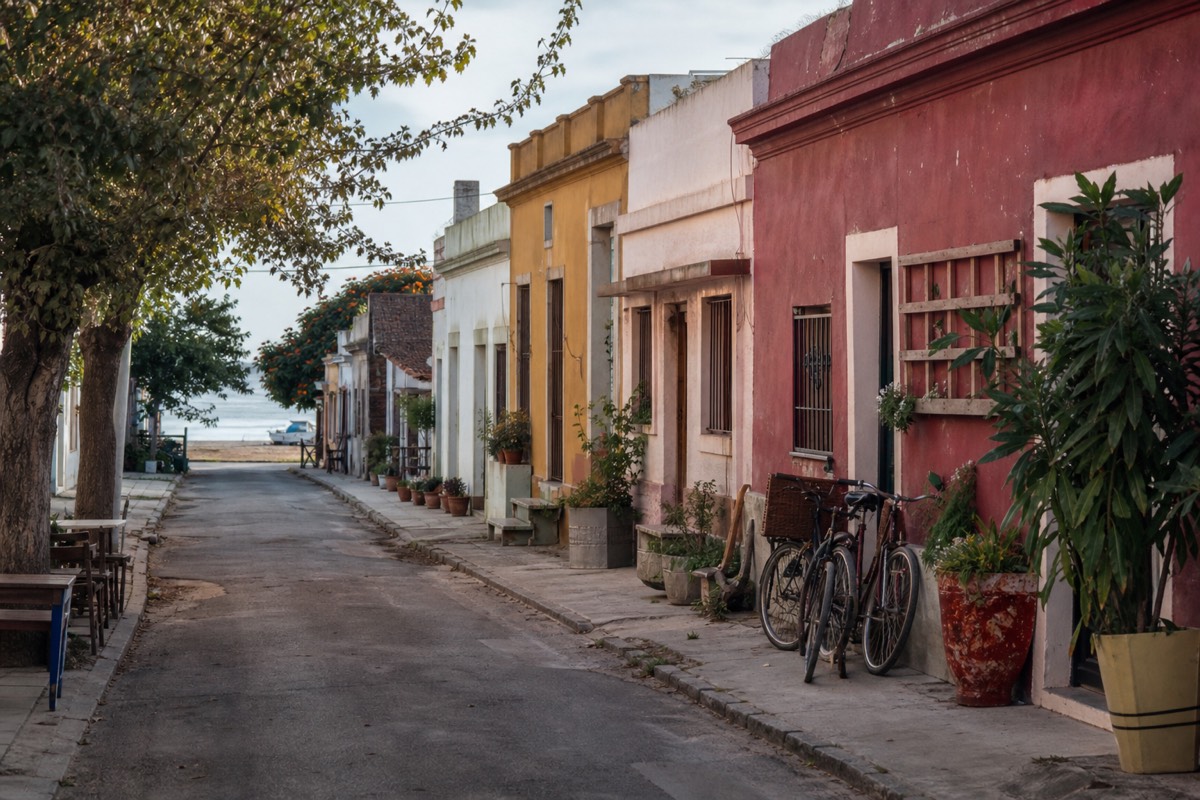
La Barra is the arty end of this coast: small galleries, design and clothing shops, workshops, cafés along the main road, and a Sunday craft market. It is a browsing village rather than a sightseeing one, with no single big-ticket attraction and a deliberately small scale that rewards an unhurried couple of hours.
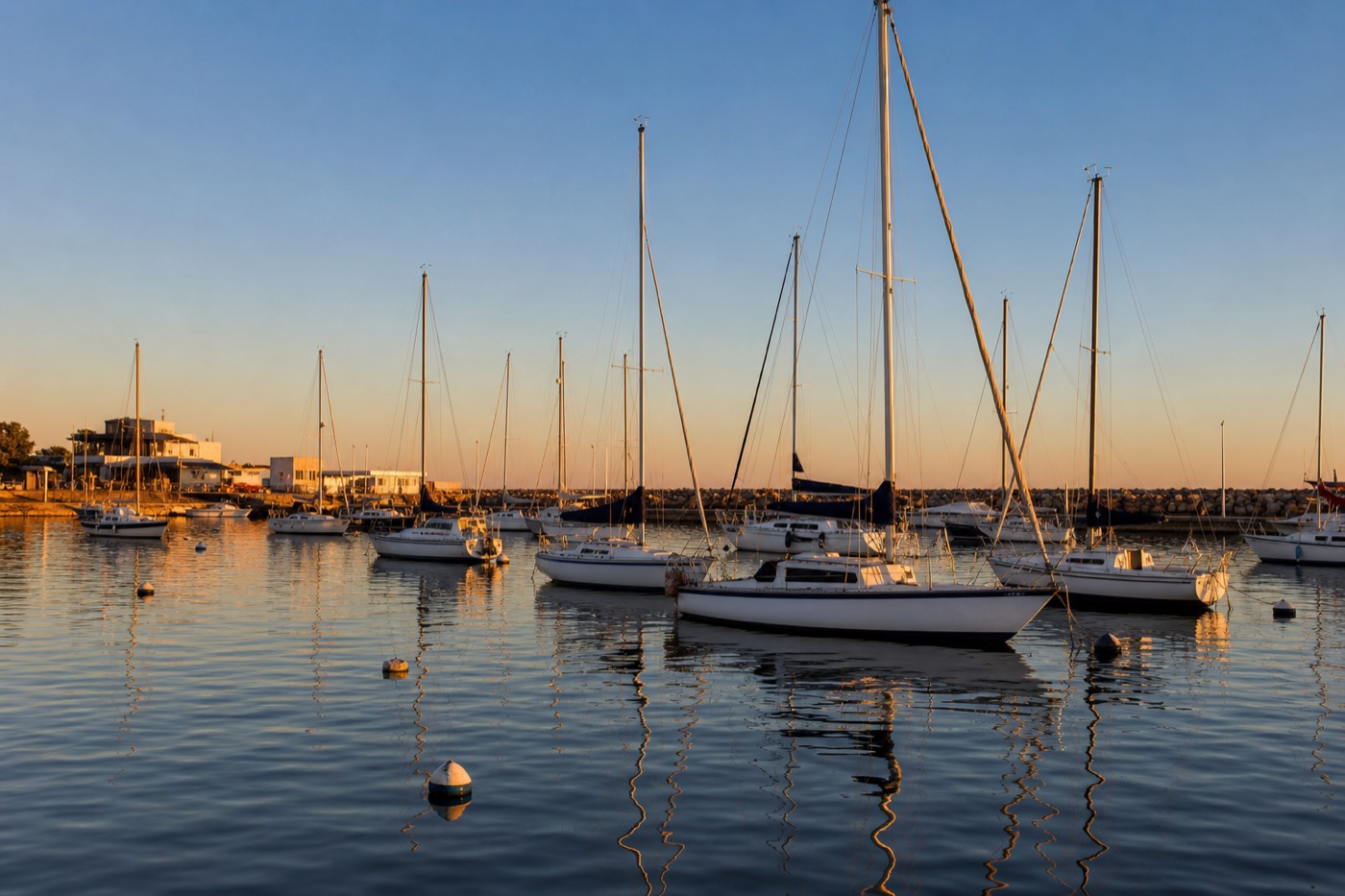
The character sits somewhere between the peninsula's resort polish and the emptiness further east. Where Punta del Este puts its energy into towers, a marina and a nightlife strip, La Barra puts its energy into a few hundred metres of road with independent shops on either side. Younger visitors gravitate here, and so do people who found the peninsula a bit too pleased with itself.
The practical list of what fills the time is short and honest:
- The Sunday Feria Artesanal, with handmade jewellery, leather goods, ceramics, clothing, art and street food stalls along the main road
- Independent galleries and design shops, strongest between December and March
- Cafés and restaurants with river or street frontage, most of them seasonal
- The bridge, as a fifteen-minute stop in either direction
- The beaches immediately east of the village, which are wider and emptier than the peninsula's
What La Barra does not have is a museum, a viewpoint or a landmark building, and that is worth knowing before you go. If you want a sculpture, a museum and an architectural set piece in one day, you want the peninsula and Punta Ballena. If you want to walk slowly, buy something made by the person who made it, and eat outdoors, this is the better address. Visitors who prefer their culture more structured usually get more from the older resort town and its hilltop viewpoint west of Punta.
What are La Barra's beaches like?
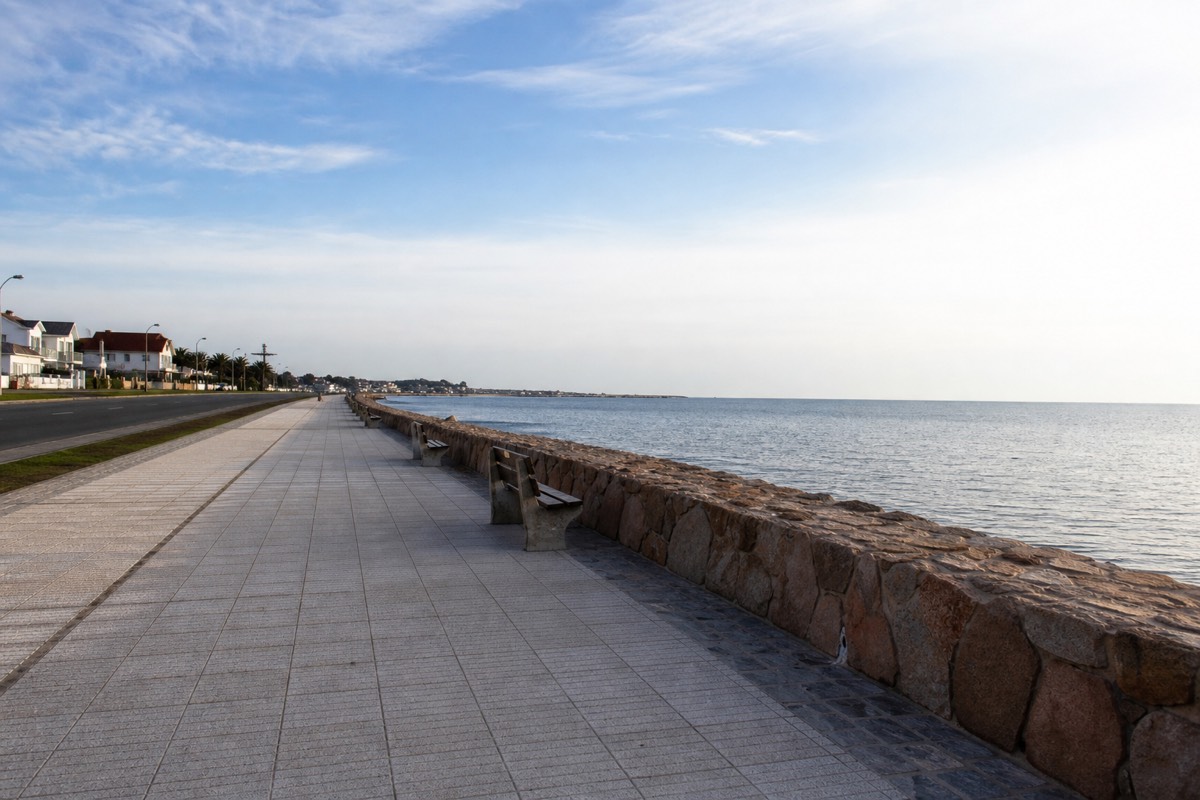
La Barra's sand is open Atlantic, east of the river mouth, and it behaves more like the coast further east than like the sheltered bay side of the peninsula. Expect real waves, more wind, more space per person and fewer services than on Playa Mansa, with the village itself only a short walk behind you.
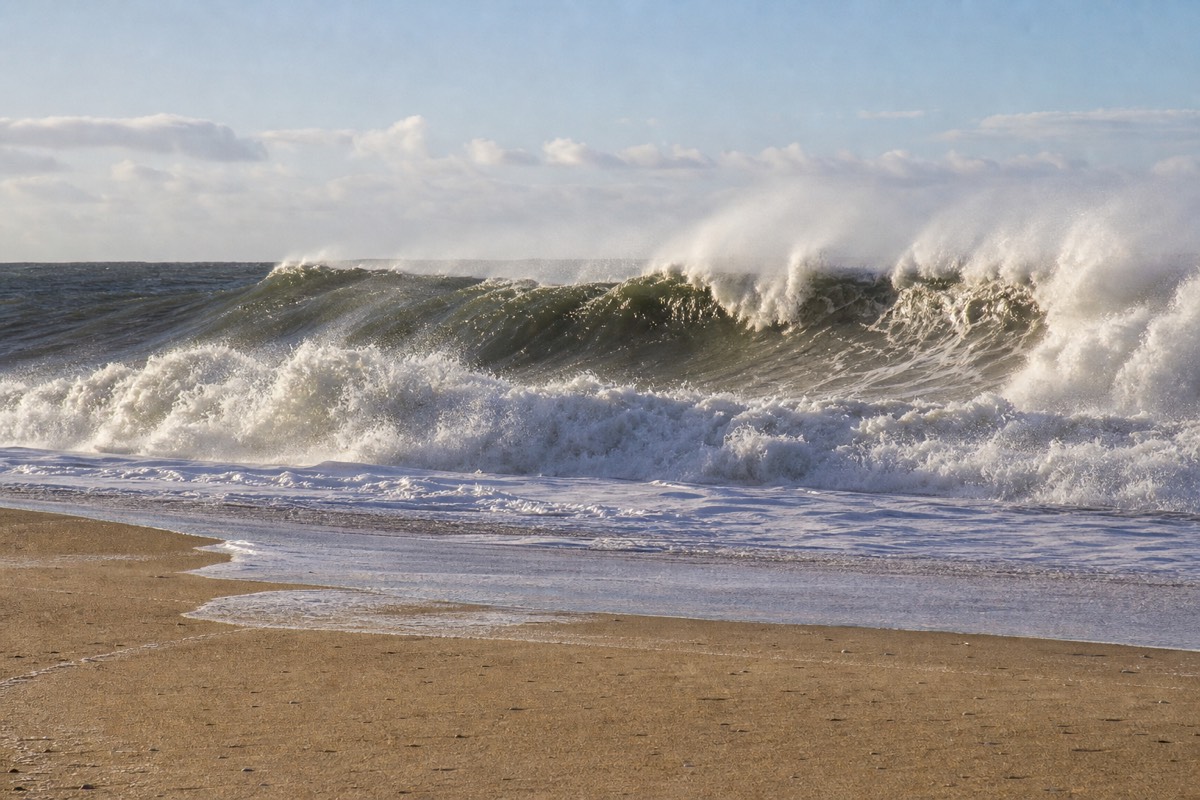
The peninsula gives visitors an unusual luxury: two beaches with genuinely different water, a few hundred metres apart. We set out the mechanics of that in the guide to how the peninsula's calm and rough beaches differ. Playa Mansa faces the bay and stays shallow. Playa Brava faces the ocean, carries swell and posts red flags regularly.
Once you cross the river at La Barra, that choice disappears. Everything from here east is Atlantic-facing, which means the swimming is more demanding and the wind is a bigger factor in whether the day works. Surfers and body-boarders do well here. Families with small children generally do better back on Mansa, where the water stays gentle and the services are denser.
The compensation is room. Even in a busy January week the sand east of La Barra holds people at a density the peninsula cannot match, and the further east you walk the more that gap widens. A reasonable pattern for a family trip is to keep the beach time on Mansa and treat La Barra as the afternoon and evening half of the day, which is roughly how the coast is used by people who live here.
How does La Barra compare with Punta del Este and José Ignacio?
Punta del Este is the big resort, dense and vertical, with the icons and the infrastructure. José Ignacio is tiny, expensive and understated, about forty five kilometres east. La Barra sits between them in both distance and character: close enough to be easy, different enough to be worth the drive.
Thinking of the three as a single spectrum is more useful than treating them as separate destinations. They share one road, one river system and one season. What changes as you move east is density, price and how much is open in winter, and those three variables move together in a predictable way.
La Barra's position on that spectrum is what makes it the easiest recommendation of the three. It costs almost nothing in travel time, it does not require a whole day, it has a genuine visual hook in the bridge, and on a Sunday it has real content in the market. José Ignacio asks for a much bigger commitment of driving and money in return for a much quieter reward.
Where La Barra loses is depth. Two hours covers it comfortably on a weekday and four or five on a Sunday, and after that you are repeating yourself. The peninsula can absorb two or three days. That is why our advice for people choosing a base, set out in the notes on picking which strip of coast to sleep on, still points most first-time visitors at the peninsula with La Barra as an excursion.
| Punta del Este peninsula | La Barra | José Ignacio | |
|---|---|---|---|
| Distance east of the peninsula | Reference point | About 10 km | About 45 km |
| Built form | Towers, marina, dense streets | Low, one main road, independent shops | Low white houses, a lighthouse, dune |
| Beach water | Both calm and rough, your choice | Open Atlantic only | Open Atlantic only, more exposed |
| Time it absorbs | Two to three days | Two hours, or half a Sunday | Three to five hours plus the drive |
| Open in winter | Largely yes | Partly, and thinning | Mostly not |
| Price level | High | High, with cheap street food on market day | Highest on this coast |
| Best for | First visits and the icons | Browsing, photographs, Sunday market | Quiet, space, a long meal |
How much does La Barra change between January and July?
Enormously. In January the main road is packed, restaurants need reservations and the nightlife runs late. By July a lot of the village is closed, the bridge is empty and the beach belongs to dog walkers. The bridge and the beach work all year; almost everything else in La Barra is a summer business.
Punta del Este as a whole runs on a December to February peak, with November, March and April as shoulder months where prices drop 30 to 60 percent and the beaches thin out while the sea stays warm enough to swim. That pattern is the backbone of our advice for the entire coast.
La Barra amplifies it. The village is smaller than the peninsula and has far less year-round population supporting it, so the seasonal swing bites harder. A visitor who arrives in early July expecting the bohemian shopping strip described in every article about this coast will find a quiet road, closed shutters and a very good bridge.
The months below are planning allowances in our own voice, not commitments from any business in the village. Individual shops and restaurants set their own calendars, and a warm autumn stretches the season by weeks.
| Months | The village | The bridge | Sunday market | Our read |
|---|---|---|---|---|
| December to February | Full, busy, late nights | Heavy traffic, crowded viewpoints | Running and packed | Go, but go early or late in the day |
| November | Opening up, comfortable | Quiet and easy | Running | One of the two best windows |
| March to mid April | Winding down, still good | Quiet, best light of the year | Running, calmer | The other best window |
| Late April to May | Thinning fast | Empty | Reduced, verify before you drive | Bridge and beach only |
| June to August | Largely closed | Empty, and often windy | Do not count on it | A short stop, not a day out |
| September to October | Reopening unevenly | Quiet | Returning | Workable with low expectations |
Which tours actually take you to the wavy bridge?
Not all of them, and the difference matters. The customisable private tour of Punta del Este names the Puente de la Barra as an option, and the private luxe day from Montevideo includes the crossing in its published route. The $49 group day tour from Montevideo lists Piriápolis, Casapueblo, the port and La Mano instead.
This is the sort of detail that gets glossed over, and it produces genuinely disappointed visitors. If the bridge is the thing you came for, book the private luxe day whose published route includes the crossing. If the bridge is a nice-to-have, any of the coastal day tours will put you within a short taxi ride of it during free time.
The strongest fit for a bridge-focused day is the private tour you shape yourself, listed at $280 per group for up to ten hours at the time of writing, because you set the stops and the operator explicitly offers the crossing when time allows. Its base itinerary already covers the port, the Ralli Museum, the cathedral in Maldonado and Casapueblo, so adding La Barra is an adjustment rather than a rebuild.
Two other routes reach it. The private luxe day from Montevideo, from $180 per group for ten hours, names the undulating bridge in its own published route. And the four-hour boutique winery run crosses it on the way inland, which is a bonus rather than a stop. Prices are the online rates at the time of writing, so check the live listing before planning around them.
| Tour | From | Length | Rating | Does its itinerary name the bridge? |
|---|---|---|---|---|
| Have It Your Way private tour in Punta del Este | $280 per group | Up to 10 hours | 4.8 across 486 bookings | Yes, offered as an option when time allows |
| From Montevideo private luxe day tour | $180 per group | 10 hours | 4.8 across 363 bookings | Yes, the crossing is in the published route |
| Punta Wine Lovers boutique winery day | $200 per person | 4 hours | 4.9 across 630 bookings | Yes, but as a pass-through on the way inland |
| Montevideo to Punta del Este full-day guided tour | $49 per person | 9 hours | 4.5 across 11,156 bookings | No, its route covers Piriápolis, Casapueblo, the port and La Mano |
| Montevideo sightseeing adventure day trip | $169 per group | 9 hours | 4.8 across 334 bookings | No, it centres on Casapueblo, La Mano and the port |
How do you fit La Barra into a single day?
Give the peninsula the morning and La Barra the afternoon, ideally on a Sunday. Do the sculpture and the marina while the light is still high, cross the bridge around midday, spend the afternoon at the market and on the sand, and come back over the river at golden hour for the photograph.
Recommended tours by season
Pick the day that matches whether you need time in the village, a pass-through at the river, or a peninsula circuit that leaves La Barra off the itinerary.
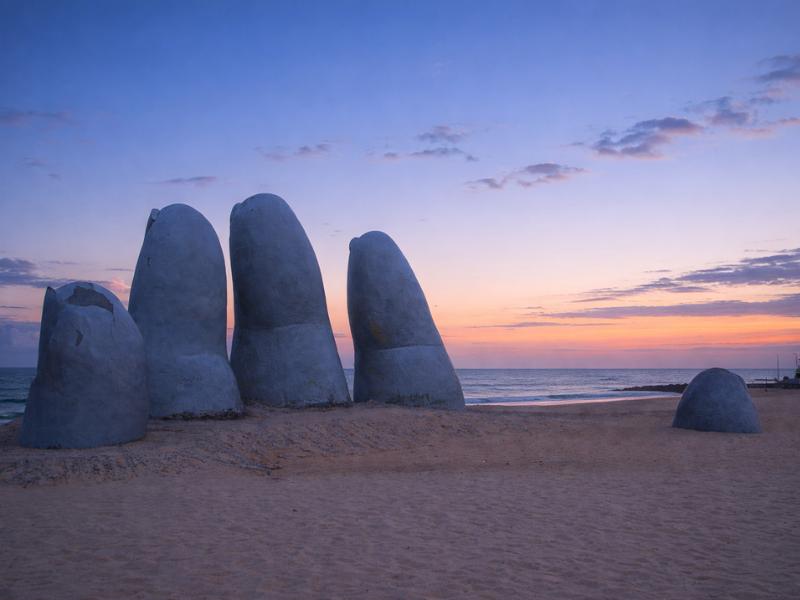
Have It Your Way Private Tour in Punta del Este
For December to March, when the village and the Sunday market are open. Up to ten hours, and the Puente de la Barra is an option you can add.
Punta Wine Lovers Tour – Exclusive Tastings & Vineyard Day
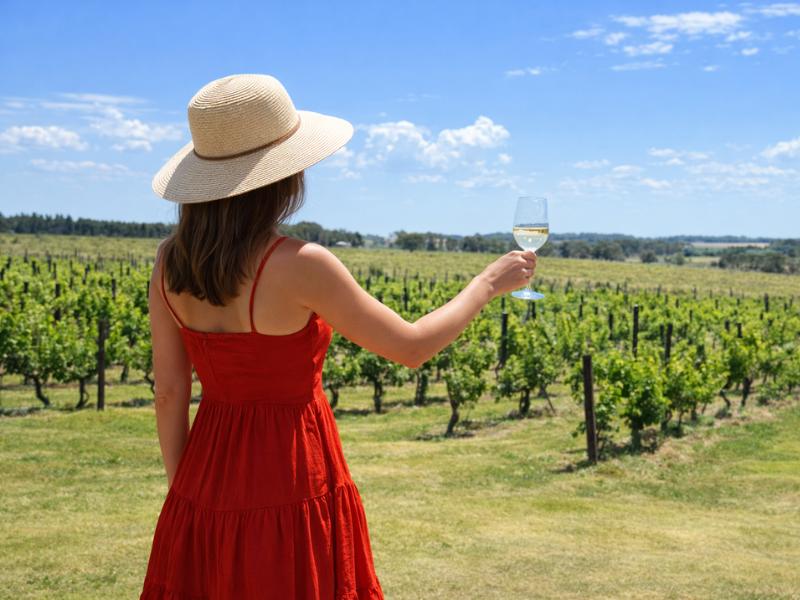
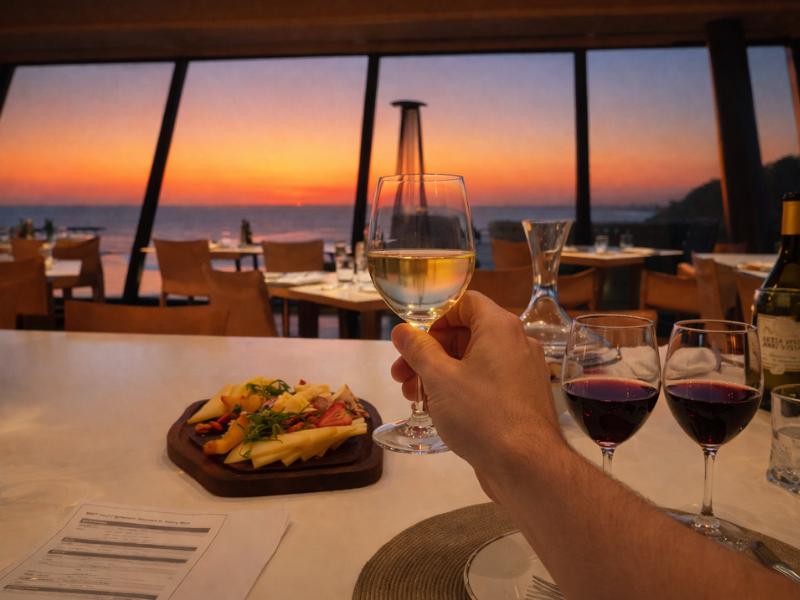
For the shoulder months, when a four-hour tasting day is more useful than lingering in the village. Crosses the wavy bridge on the way inland.
From Montevideo: Private Luxe Punta del Este Day Tour
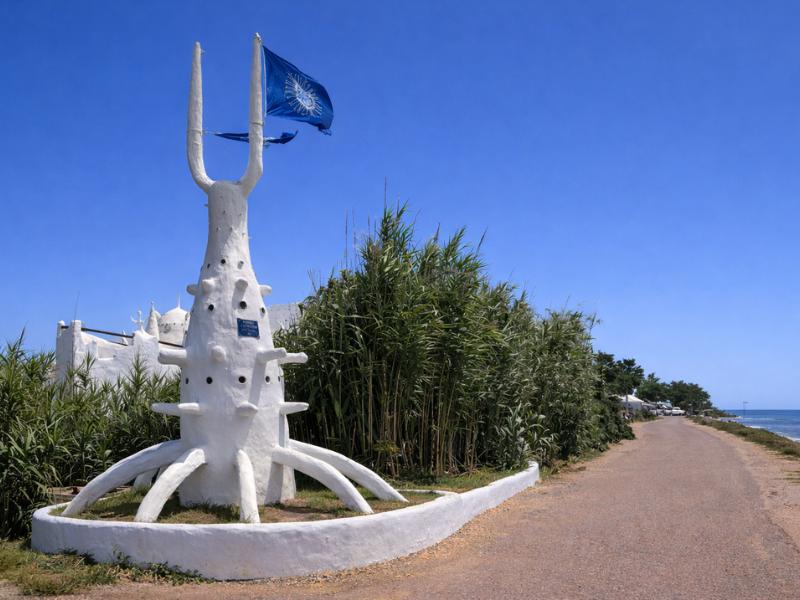
Ten hours from the capital. The published route names the undulating bridge, so you do not have to hope for free time to reach it.
Montevideo to Punta del Este: Full-Day Guided Tour
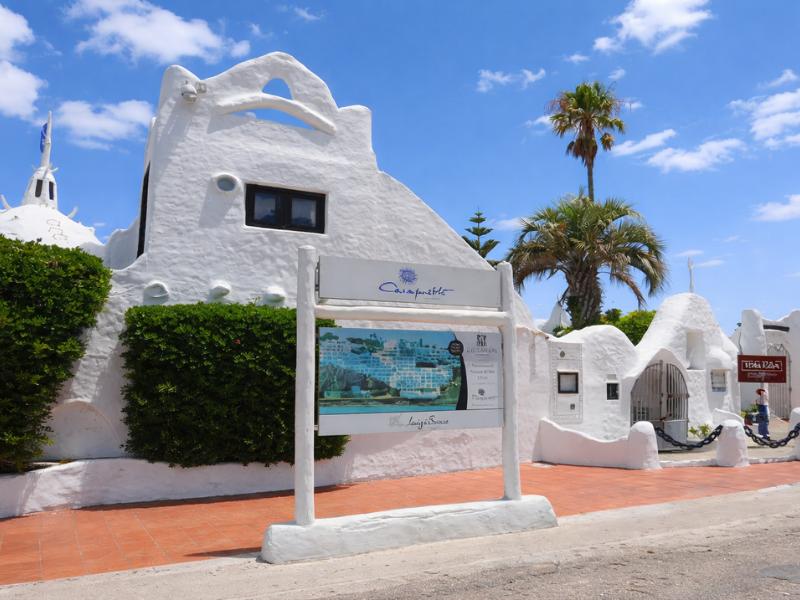
Nine hours from Montevideo for Piriápolis, Casapueblo, the port and La Mano. Use this when you want the peninsula circuit rather than La Barra.
Running the day westward instead, La Barra first and the peninsula after, is the version most people default to and the weaker of the two. The market does not properly fill until late morning, and you end up doing the peninsula's icons in the flat afternoon glare while the best bridge light happens without you.
Building it eastward also matches how the traffic moves. Everybody is heading east from the peninsula on a Sunday, so an earlier crossing spares you the worst of it, and the return leg late in the day runs against the flow. If your day is starting from the capital instead, expect the maths to change entirely: those tours already cover about 130 kilometres each way, and there is only so much you can bolt onto that.
The plan below is a planning allowance in our own voice rather than any operator's schedule. Adjust it hard in high summer, when everything takes longer, and in winter, when the market may not be running at all.
| Time | Where | What you are doing |
|---|---|---|
| 09:30 | Peninsula | La Mano on Playa Brava before the crowd builds |
| 10:30 | Peninsula | The port, the yachts and the sea lions on the dock |
| 11:45 | The river | Cross the bridge eastbound, feel the dip, keep driving |
| 12:00 | La Barra | Sunday market along the main road, street food included |
| 14:00 | La Barra | Long lunch, river or street frontage |
| 15:30 | Beach east of the village | Open Atlantic sand, wind dependent |
| 17:30 | The riverbank | Golden-hour photographs of the bridge in profile |
| 18:30 | Back west | Return over the bridge against the traffic |
What should you know about parking, traffic and eating here in season?
In January and February La Barra's single main road carries the entire coast's Sunday traffic, parking near the market is difficult, and restaurants and bars want reservations. Arrive before midday or after four, park on the edge and walk in, and book anywhere you actually want to eat.
The pressure is structural. La Barra was laid out as a small village and is now asked to absorb a large share of a resort coast's visitors on a single day of the week during the ten busiest weeks of the year. Roads and lots across the region fill fast on summer weekends and holidays, and this is the tightest pinch point of them all.
Three habits make the difference. Come at the shoulders of the day rather than the middle. Accept a longer walk in exchange for a parking space you can leave from easily. And treat lunch as something you arranged in advance, not something you will find. Visitors who plan around all three have a good day; visitors who improvise on a January Sunday usually do not.
After dark, La Barra has its own scene, separate from the peninsula's and skewing younger. It runs late and it is firmly seasonal, which is why we handle it as its own subject in the notes on how the coast's after-dark scene actually works. Whatever you plan, sort out how you are getting home before you start drinking, because taxis get scarce here at closing time in peak season.
Who should skip La Barra?
Almost nobody, given it costs fifteen minutes of driving. The exceptions are visitors travelling midweek in winter, when there is little more than a bridge to see, and anyone whose day is already a long transfer from Montevideo and back with no spare hours to give.
That is a genuinely different verdict from the one we give for the coast's other excursions, and the reason is simply proximity. A place ten kilometres away with a free, unusual, photogenic landmark does not need to justify itself the way a forty five kilometre drive does. Even a fifteen-minute stop clears the bar.
The winter-midweek exception is real, though. Between June and August, with the market not running and much of the village shut, you are looking at a bridge and a windy beach. That is fine as five minutes on the way past. It is not an outing, and nobody should build an afternoon around it.
The other exception is the visitor on a single long day in from the capital. If your whole trip is one of the guided coastal days we list, the peninsula, the sculpture, the port and Casapueblo will already fill the hours, and there is a strong argument for doing those four things properly rather than adding a fifth. The 130 kilometre run out from Montevideo is not a distance you want to spend the day rushing against, and Uruguay's national tourism board is a reasonable place to cross-check what else is open on your dates.