Piriápolis Day Trip from Punta del Este: The Older Resort on the Coast
One man bought a stretch of Uruguayan coast in 1890, called it the Resort of the Future and built a hotel large enough to be among the biggest in South America. That town is thirty kilometres west of Punta del Este, and the coast's most-booked day tour already stops there.
Where Piriápolis sits on the coast
Distances for Piriápolis and Punta del Este are measured east from Montevideo; Punta Ballena, La Barra and José Ignacio are measured from Punta del Este itself.
Where is Piriápolis, and is it east or west of Punta del Este?
Piriápolis lies west of Punta del Este, about 100 kilometres east of Montevideo on the Río de la Plata coast. Since the peninsula sits roughly 130 kilometres from the capital, the two resorts are around thirty kilometres apart, with Piriápolis on the road in from Montevideo rather than beyond it.
Direction is the first thing to get straight, because it changes the whole shape of your day. La Barra and José Ignacio are both east of the peninsula, so visiting them means driving away from the capital. Piriápolis is the opposite. It sits on the way in, which is precisely why the coastal day tours from Montevideo can stop there without adding a detour to their route.
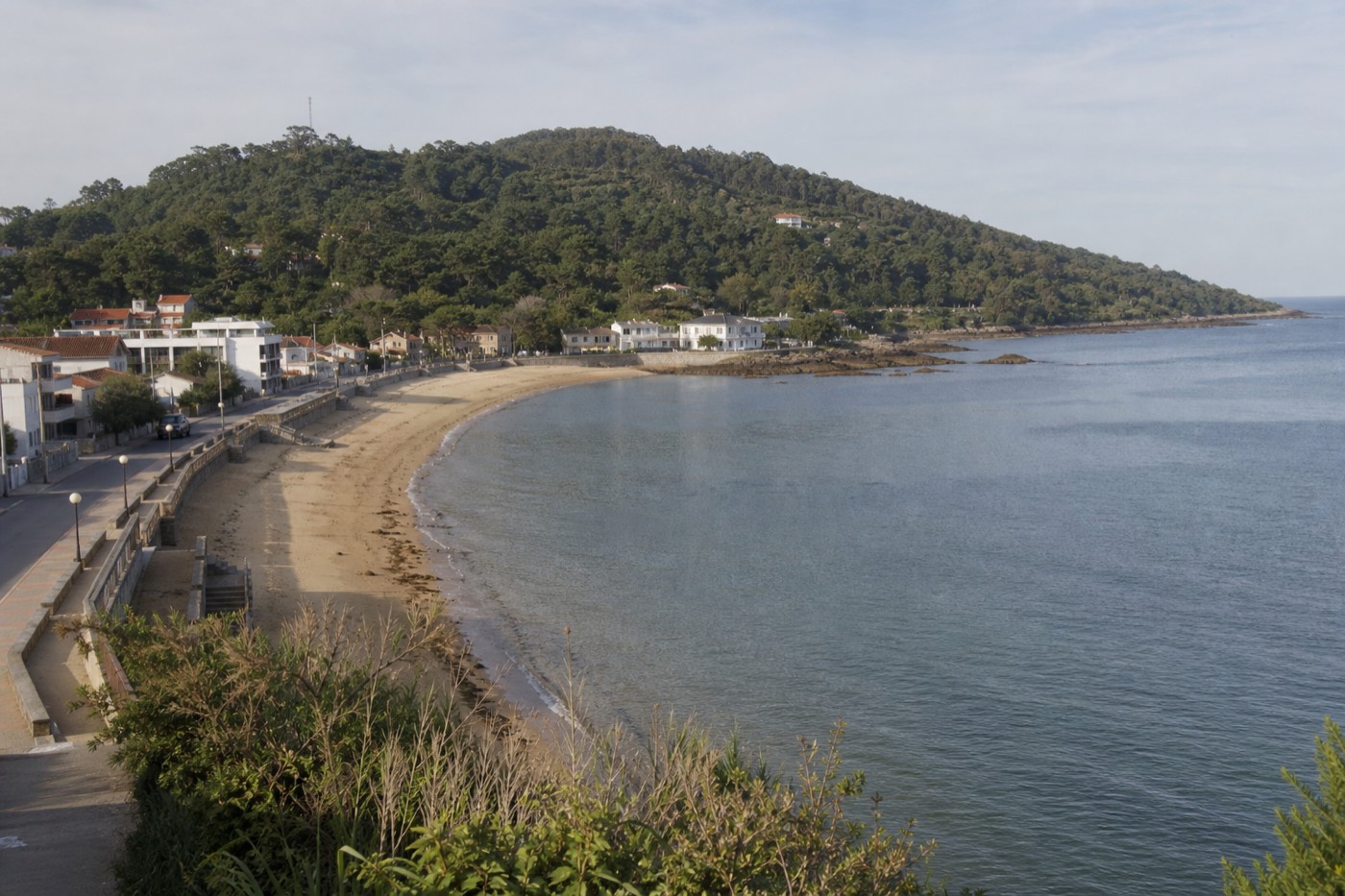
The water is different too, and this is not a small point. Punta del Este occupies the exact hinge where the Río de la Plata meets the open Atlantic, which is what gives it one rough beach and one calm one. Piriápolis sits back on the river side of that hinge, in a curving bay with hills behind it. The public record of the town puts it on the Río de la Plata coast, reached by the Ruta Interbalnearia and Route 37, and that estuary position explains the calmer, gentler feel of the seafront.
Both towns sit inside Maldonado Department, 4,793 square kilometres holding 212,951 inhabitants as of 2023, whose southern belt has run on tourism since the 1950s. Piriápolis, though, got there first by several decades, and that head start is the whole story of the place.
| Place | Position | Water | What it is known for |
|---|---|---|---|
| Montevideo | The capital, the reference point | Río de la Plata | Where most coastal day tours begin |
| Piriápolis | About 100 km east of Montevideo | Río de la Plata, curving bay | The Argentino Hotel, San Antonio hill, an older seafront |
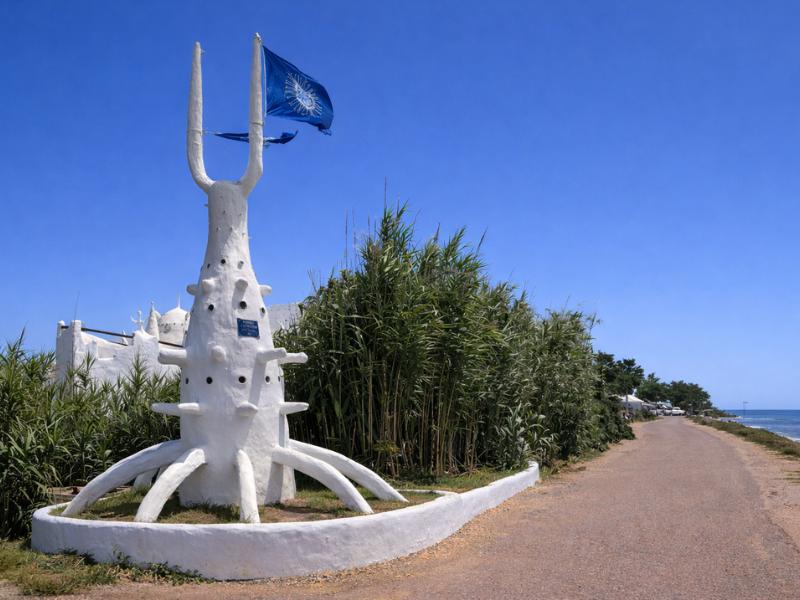
| Punta Ballena | About 12 km west of Punta del Este | Cliffs above the coast | Casapueblo, the artist's white compound |
| Punta del Este | About 130 km east of Montevideo | Where river meets open Atlantic | La Mano, the marina, two very different beaches |
| La Barra | About 10 km east of the peninsula | Open Atlantic | The undulating bridge and the Sunday market |
| José Ignacio | About 45 km east of the peninsula | Open Atlantic, exposed | A lighthouse and a very small, very seasonal village |
Why does Piriápolis exist at all?
Because one man built it. Francisco Piria bought a large stretch of land including the hills behind the bay and founded the resort on 5 November 1890 under the name El Balneario del Porvenir, the Resort of the Future. Piriápolis is therefore a planned town, laid out as a seaside resort from the beginning rather than grown into one.
Almost every other place on this coast happened the other way around. A fishing settlement, a lighthouse, a few houses, then visitors, then hotels. Piriápolis inverted that sequence entirely. The resort came first, complete with a name announcing what it intended to become, and the town filled in around it.
Piria was a businessman with money, land and an unusually developed sense of theatre, and the town he laid out reflects all three. He bought the hills as well as the shore, which is why the setting still feels composed rather than accidental: a curving bay in front, high ground behind, and a promenade running the length of it. The 2011 census recorded 8,830 permanent inhabitants in the town, with the wider municipality closer to fourteen thousand, so this is a real place with a real year-round population, not a summer shell.
The historical arithmetic is worth holding onto when you compare the two resorts. Piriápolis was operating as a purpose-built seaside destination decades before Punta del Este became the international name it is now, and the tourism boom that reshaped this coast did not arrive until the 1950s. What you are looking at in Piriápolis is largely what came before that boom, which is exactly why it feels older.
What is the Argentino Hotel and can you go inside?
The Argentino Hotel is Piria's centrepiece, built between 1920 and 1930 and described in the record as one of the biggest hotels in South America of its era. It dominates the seafront, it is still a working hotel, and its scale relative to the small town around it is the single most striking thing about Piriápolis.
Take the proportions seriously for a moment. A town of a few thousand permanent residents has, on its waterfront, a hotel built to a scale that made it one of the largest on the continent when it opened. Nothing else on this coast produces that particular effect, and photographs consistently undersell it because the building only reads properly when you see how much of the seafront it occupies.
Public access to the interior of a working hotel is the hotel's decision and it changes, so we will not publish opening arrangements we cannot verify for your dates. What is reliable is the exterior, the frontage, and the promenade running past it, all of which are free and open. The coach tours that stop here work on exactly that basis: they photograph the hotel from outside and move on.
The hotel also functions as a dating device for the whole town. Once you know that the resort was founded in 1890 and this building went up between 1920 and 1930, the architecture along the rest of the seafront falls into place as belonging to the same era and the same intention. It is a coherent early-twentieth-century resort, and coherence of that kind is rare on a coast that has been rebuilt repeatedly since.
| Set piece | Allow | Cost | Notes |
|---|---|---|---|
| Argentino Hotel frontage | 15 to 25 minutes | Free from outside | Built 1920 to 1930, still a working hotel |
| San Antonio hill and the view | 30 to 60 minutes | Free on foot, chair lift charged separately | The panorama is the reason the tours come up here |
| Rambla de los Argentinos | 30 to 45 minutes | Free | The waterfront promenade the town is built along |
| The bay and the beach | 1 to 2 hours | Free | River-side water, calmer than the Atlantic beaches east |
| Piria's Castle | Allow a separate stop | Verify before you go | The founder's own residence, outside the seafront core |
| Cerro Pan de Azúcar | Half a day if you climb it | Free to approach | 10 km outside town, Uruguay's third-highest point |
What is the alchemy and Templar story, and how seriously should you take it?
Guides on the coastal day tours talk about Piriápolis in connection with alchemy and Templar mysticism, and the founder's reputation for embedding esoteric symbolism in the town is part of local lore. Treat it as colour and as a good story rather than as settled history, because the encyclopedic record of the town does not corroborate it.
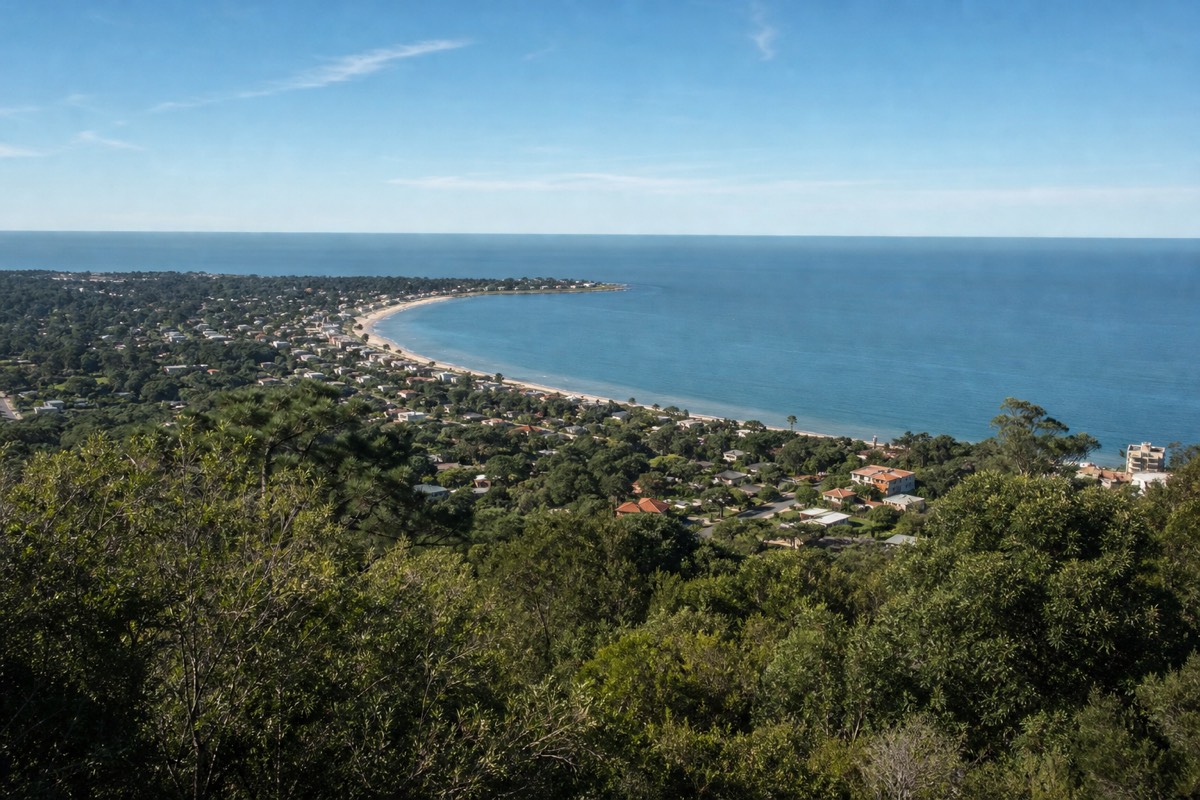
We are being deliberately careful here, because this is the part of the Piriápolis story that gets repeated most confidently and verified least. The guide commentary on the $49 full-day tour covers the region's connection to alchemy and Templar mysticism during the drive east, and the site's own description of the town calls Piria an eccentric entrepreneur who worked esoteric symbolism into the architecture. Those are real statements about what the tour tells you.
What they are not is a verified historical claim about Francisco Piria's beliefs or intentions. The public record confirms the founding date, the land purchase, the name El Balneario del Porvenir and the hotel. It does not confirm an occult programme behind the street plan. That distinction is worth keeping in view, because the story is genuinely enjoyable and does not need to be literally true to make the drive on the $49 full-day guided tour more interesting.
In practice this is one of the better arguments for taking a guided day from Montevideo rather than driving yourself. A town whose interest is partly in its founder's intentions is a town that benefits enormously from someone talking while you look at it. Left to yourself, the Argentino Hotel is a large old building on a seafront. With the commentary, it is the centrepiece of one man's Resort of the Future.
What do you see from San Antonio hill?
San Antonio hill rises directly behind the town and gives you the whole of Piriápolis in one frame: the curving bay, the promenade, the Argentino Hotel below, and the coastline running away in both directions. There is a chair lift, and the Templo de San Antonio sits at the top.
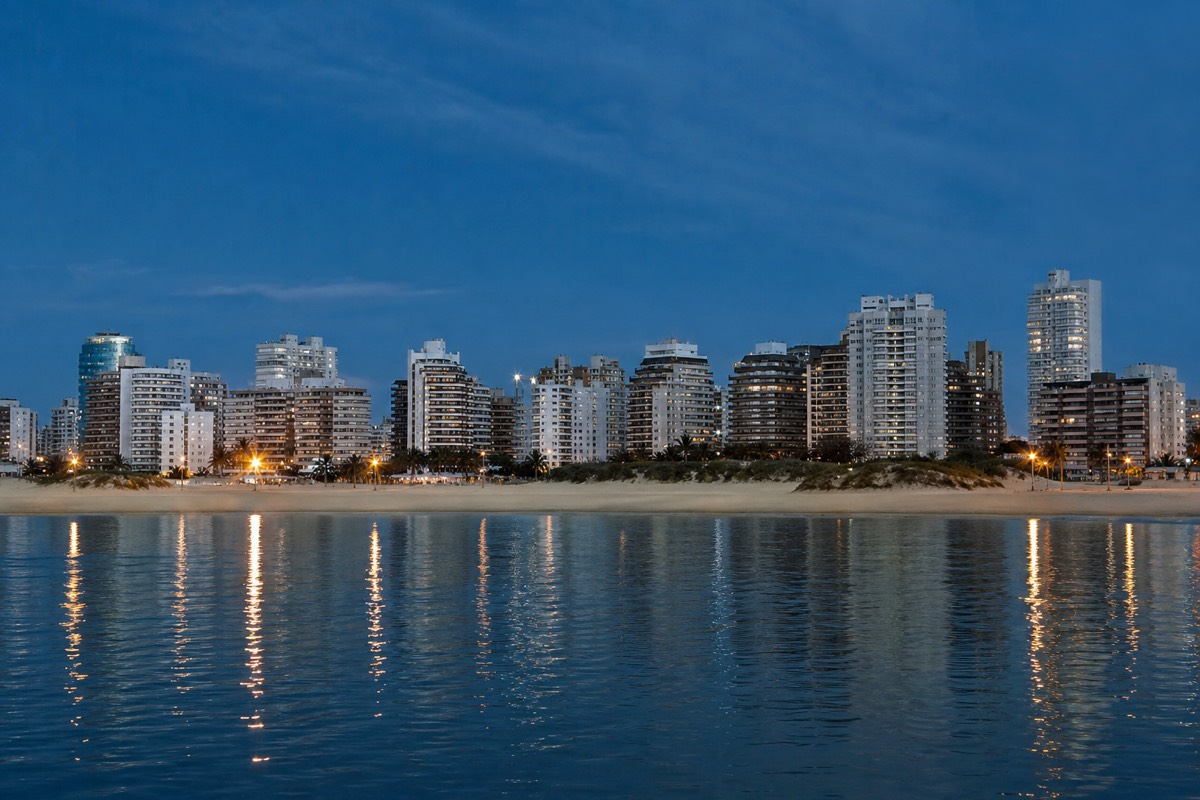
Viewpoints are the thing this coast is generally short of. Punta del Este is flat, the peninsula has no high ground to speak of, and the best elevated view further east comes from the cliffs at the white compound above Punta Ballena. Piriápolis has an actual hill immediately behind the town, which is why every coach tour that stops here goes up it.
What the view gives you is comprehension. From the seafront, Piriápolis reads as a promenade with a big hotel on it. From the top of San Antonio, you can see that it is a bay enclosed by high ground, with the town filling the flat crescent between the two, which is the geography Piria bought and the reason he chose this spot. Fifteen minutes up here does more for your understanding of the place than an hour on the rambla.
Two practical notes. The terrain at the top is uneven, and the operator of the main day tour states plainly that the trip is not suitable for wheelchair users because of that. And the hill catches the wind, so a jacket is sensible even on a warm day, particularly outside high summer. Cerro Pan de Azúcar, ten kilometres outside town and the third-highest point in Uruguay, is a different and much bigger undertaking that does not fit inside a day trip.
What is the seafront and the bay like?
Piriápolis is built along the Rambla de los Argentinos, a waterfront promenade curving around the bay with the town on one side and the water on the other. The water is Río de la Plata rather than open Atlantic, so it is calmer, and the atmosphere is old-fashioned seaside rather than resort glamour.
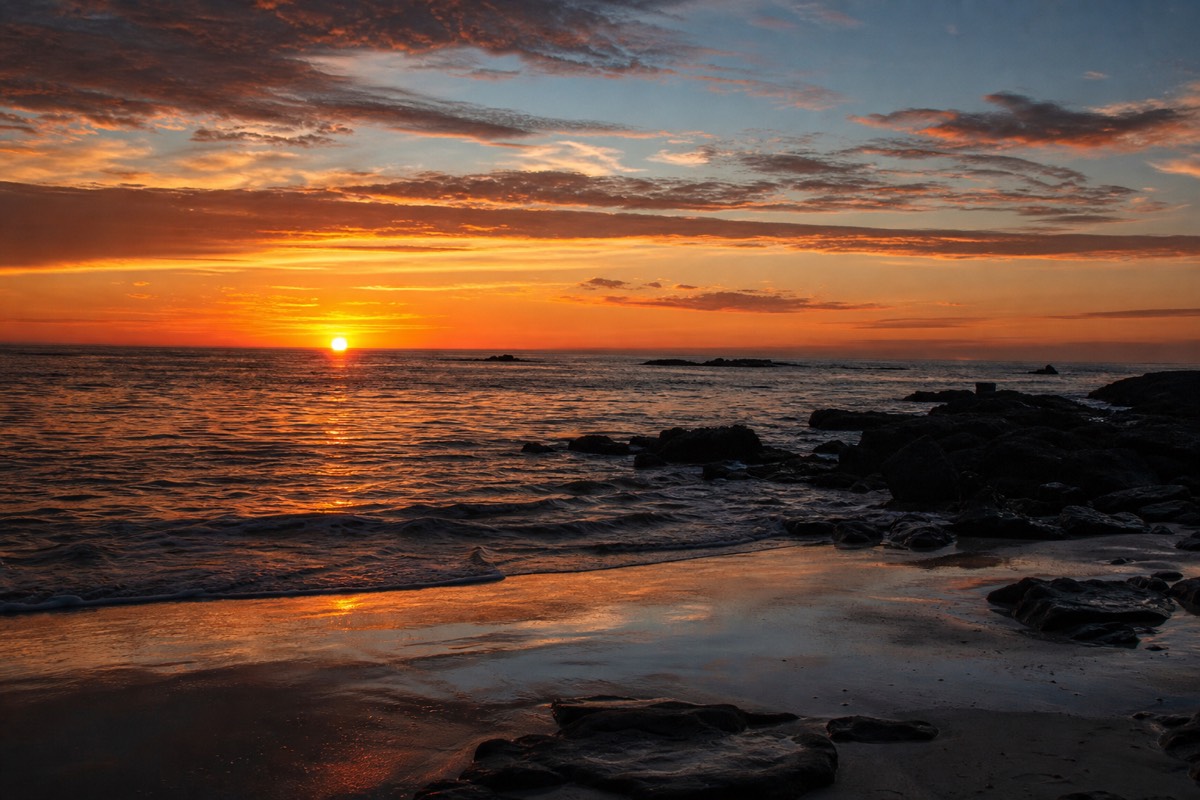
The promenade is the town's spine and the best way to understand how it is meant to be used. You walk it. That is the activity. Cafes and ice cream on one side, sand and water on the other, hills at your back, and a hotel from 1930 anchoring the middle of the curve. It is a very legible piece of town planning and it has aged in a way that many visitors find more appealing than the alternative.
Because the bay faces the estuary rather than the ocean, the swimming here is gentler than anywhere east of the peninsula. That has a direct consequence for who enjoys the place. Families with young children often have a better time on this water than on the Atlantic beaches at La Barra or José Ignacio, a point we pick up in the notes on travelling this coast with children.
What the seafront does not have is a marina full of large yachts, a nightlife strip, or the density of restaurants you find on the peninsula. Piriápolis has a working port and a resort promenade. Visitors who arrive expecting a smaller Punta del Este are always slightly thrown. Visitors who arrive expecting a South American seaside town from the 1930s are usually delighted.
How is Piriápolis different from Punta del Este?
Piriápolis is older, smaller, cheaper, calmer and more domestic. It draws Uruguayan and Argentine families rather than an international crowd, it sits on estuary water rather than open ocean, and its landmark is a 1930 hotel instead of a sculpture and a marina. Neither is a lesser version of the other.
The temptation is to rank them, and it produces bad advice. These are two different products of two different eras. Piriápolis was designed in 1890 and built out through the 1920s as a self-contained resort. Punta del Este became internationally famous much later, on the back of the coastal tourism boom from the 1950s onward, and it has the towers, prices and reputation to match.
Our read on which one a visitor should prioritise depends almost entirely on what they came for. If the answer involves the words glamorous, beach, nightlife or iconic, the peninsula wins without much argument, and our guide to how many days this coast really needs is built around that assumption. If the answer involves the words quiet, family, old-fashioned or cheap, Piriápolis is a much better fit and almost nobody tells you so.
There is also a straightforward budget dimension. Punta del Este in January is expensive by any standard, with accommodation and restaurant prices at their annual peak. Piriápolis serves a more domestic market with a longer-established local economy, and that shows up in what a day there costs.
| Piriápolis | Punta del Este | |
|---|---|---|
| Founded as a resort | 5 November 1890, planned from the start | Grew into international fame after the 1950s boom |
| Permanent population | 8,830 at the 2011 census, about 14,000 in the municipality | Much larger, with a big seasonal multiple on top |
| Water | Río de la Plata bay, calmer | River on one side, open Atlantic on the other |
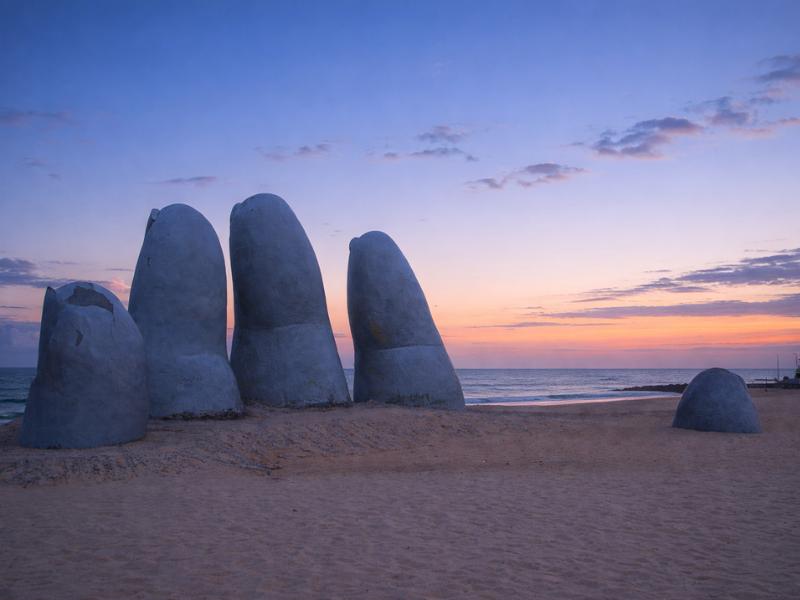
| Landmark | The Argentino Hotel, 1920 to 1930 | La Mano sculpture and the yacht marina |
| High ground | San Antonio hill directly behind town | Effectively none on the peninsula |
| Visitor mix | Largely Uruguayan and Argentine families | International, with a strong Buenos Aires contingent |
| Price level | Noticeably lower | The most expensive stretch of this coast |
| Evenings | Quiet, promenade and dinner | Busy, and very busy in January |
What does the $49 full-day tour actually do in Piriápolis?
The $49 full-day guided run along the coast stops at the historic Argentino Hotel and ascends San Antonio hill for the panoramic view, with guide commentary on the town's founder and the alchemy and Templar associations during the drive. On the published timeline, Piriápolis gets roughly forty five minutes.
Recommended tours by season
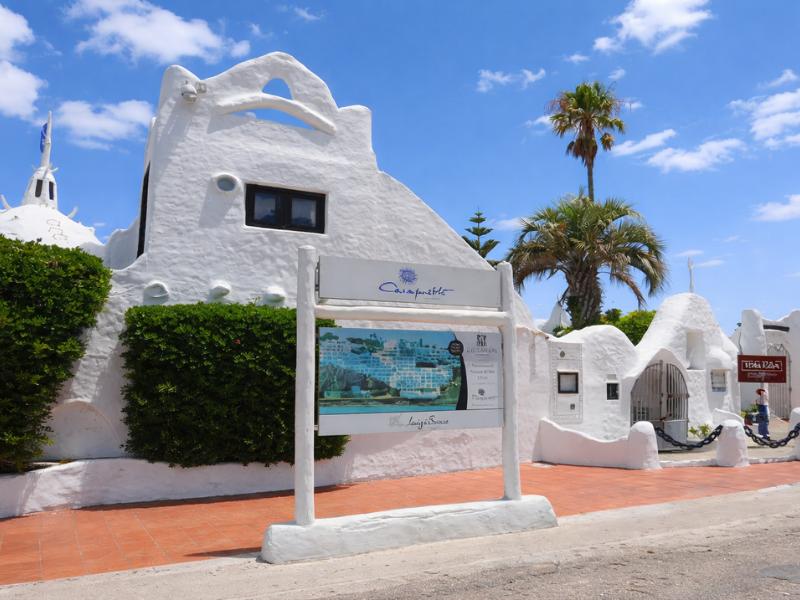
Montevideo to Punta del Este: Full-Day Guided Tour
The only tour in this list whose published route names Piriápolis. Nine hours from Montevideo, with the Argentino Hotel and San Antonio hill as stops before Casapueblo and Punta del Este.
Have It Your Way Private Tour in Punta del Este
A ten-hour private day based in Punta del Este, useful in the quieter months when you want the rambla and a meal as well as the hill, and can set the pace yourself.
From Montevideo: Private Luxe Punta del Este Day Tour
Ten hours from Montevideo with a guide for your own group. The published itinerary centres on Punta del Este; a Piriápolis stop is something to raise before you book.
Punta Wine Lovers Tour – Exclusive Tastings & Vineyard Day
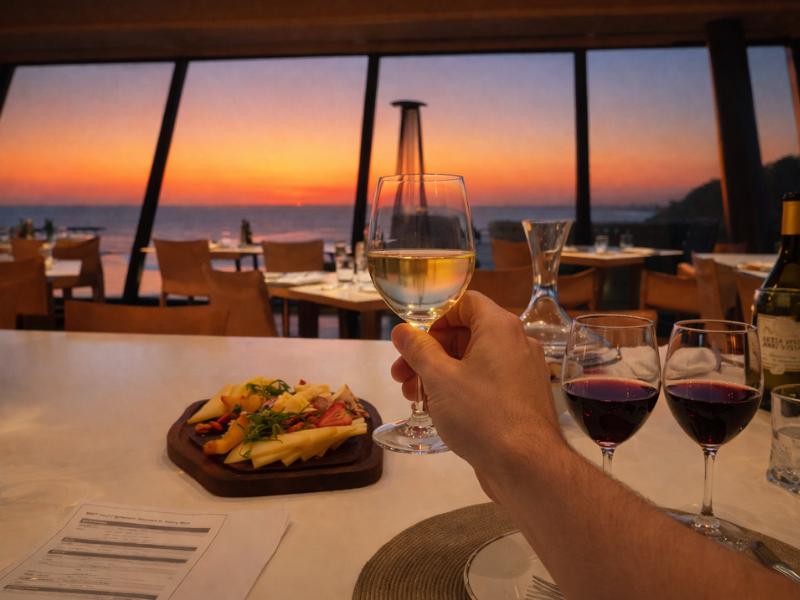
A four-hour vineyard day on the Punta del Este side of the coast, for dates when you want tastings rather than another town stop.
This is the single most useful fact in this guide, and it is the reason we lead with this tour rather than a more expensive one. Piriápolis is not a stop you have to arrange separately or argue for. It is written into the itinerary of the most-booked product on this site, listed at $49 per person for nine hours at the time of writing, rated 4.5 across 11,156 bookings.
The published shape of the day has pickup in Montevideo in the morning, arrival in Piriápolis for the hill viewpoint around late morning, then Casapueblo at Punta Ballena, then Punta del Este itself with the port, La Mano and around three hours of free time before returning to the capital. Round-trip transport, a multi-lingual guide and the guided visit to San Antonio hill are included. Casapueblo admission is not, and lunch only if you select that option.
Be clear about what forty five minutes buys. It buys the hotel from outside, the hill, the view and the commentary. It does not buy the promenade at leisure, a swim in the bay, Piria's Castle or Cerro Pan de Azúcar. For most visitors on a single coastal day out of Montevideo, that trade is correct, because the rest of the day is spent somewhere with more to see. If Piriápolis itself is what you want, a private day you can shape is the different plan.
| Tour | From | Length | Rating | Does its published route include Piriápolis? |
|---|---|---|---|---|
| Montevideo to Punta del Este full-day guided tour | $49 per person | 9 hours | 4.5 across 11,156 bookings | Yes, the Argentino Hotel and San Antonio hill are named stops |
| Montevideo to Punta del Este sightseeing adventure day trip | $169 per group | 9 hours | 4.8 across 334 bookings | No, the route runs Casapueblo, La Mano and the port |
| From Montevideo private luxe Punta del Este day tour | $180 per group | 10 hours | 4.8 across 363 bookings | No, though a private itinerary can be discussed with the guide |
Is Piriápolis better as a tour stop or an independent trip?
As a tour stop for almost everyone. Piriápolis sits on the road between Montevideo and Punta del Este, so a guided coastal day covers it at no extra travel cost, with a guide supplying the founder's story that makes the town interesting. Go independently only if the town itself, rather than the coast, is your destination.
The geography does the arguing here. Because Piriápolis is on the way in from the capital, adding it to a Montevideo departure costs you nothing but the stopping time. Reaching it from a base on the Punta del Este peninsula means driving roughly thirty kilometres west and back, which is entirely doable but is a deliberate outing rather than a free extra.
The case for going independently is real but narrow. If you want to swim in the bay, walk the full length of the rambla, eat a proper lunch on the seafront and go looking for Piria's Castle, forty five minutes will infuriate you and you should drive yourself or arrange a private day. Both of the private options from the capital, the private sightseeing day trip at $169 per group and the private luxe day with a guide of your own at $180 per group, publish routes centred on Casapueblo and Punta del Este rather than Piriápolis, so discuss the stop with the operator before booking rather than assuming it.
For everyone else, the shared coastal day is the efficient answer, and it is worth understanding how those runs are built before choosing one. We set that out in the guide to how the day tours from the capital are structured.
| As a stop on a coastal day tour | As an independent trip | |
|---|---|---|
| Time in the town | Roughly 45 minutes on the published timeline | As long as you want, three to five hours works well |
| What you cover | Hotel frontage, San Antonio hill, the view, commentary | All of that plus the rambla, the beach and a meal |
| Extra travel | None, it is on the route from Montevideo | About thirty kilometres each way from the peninsula |
| Cost | Included in the day tour price | Your own transport plus food |
| The founder's story | Delivered by the guide en route | You will need to read it yourself |
| Best for | Anyone whose real target is the whole coast | Anyone whose real target is this town |
How long is long enough in Piriápolis?
Forty five minutes covers the hotel, the hill and the view, which is what a coastal day tour gives you and what most visitors need. Three to four hours covers the town properly: the promenade end to end, time on the bay, a seafront lunch and an unhurried look at the architecture. Beyond that you are repeating yourself.
The honest ceiling matters as much as the floor. Piriápolis is not a place that absorbs a full day unless you are swimming and eating your way through it, and a visitor who allocates eight hours will spend the last three wondering what to do. The town's set pieces are genuinely good and genuinely few.
The version we would recommend to someone based on the peninsula with a spare morning goes like this. Drive west early, take the hill first while the light is still coming across the bay from the east, walk down into town, cover the rambla and the hotel, eat lunch on the seafront, and be back on the peninsula by mid-afternoon. That is a half day well spent, and it pairs naturally with a stop at Casapueblo on the way back since Punta Ballena sits between the two.
What we would not do is try to combine Piriápolis with anything east of the peninsula in a single day. Adding the undulating bridge crossing at La Barra or, worse, the small lighthouse village forty five kilometres east to a westward trip means crossing the entire resort coast twice. The coast is a line, and the days that work run along it in one direction.
When should you go, and what closes out of season?
December to February is peak, November and March are the sweet spots, and Piriápolis holds up better in winter than the villages east of Punta del Este because it has a real permanent population of nearly nine thousand. The hill, the hotel frontage and the promenade work in any month.
The regional pattern is consistent across this whole coast. High season runs December through February, when temperatures peak and visitors arrive from across South America. November, March and April are the shoulder months, with prices 30 to 60 percent below peak, thinner crowds and a sea still warm enough to swim in through March.
Where Piriápolis diverges from its neighbours is at the bottom of the year. A village of a few hundred residents cannot keep restaurants open through July. A town of nearly nine thousand can keep a good share of its ordinary life running, which means a winter visit here gets you an open town rather than shuttered frontage. It will be quiet, and it will be windy on the hill, but it will not be closed.
That resilience is a genuinely useful planning fact for anyone travelling this coast between May and September. If your dates fall outside the season, Piriápolis is a better use of a day than the eastern villages, and our guide to choosing which month to take this coast in sets out the wider picture. The bands below are our own planning allowances rather than commitments from any business in the town.
| Months | Crowds | What is open | Our read |
|---|---|---|---|
| December to February | Peak, domestic and Argentine families | Everything | Go early in the day, the seafront fills by midday |
| November | Low | Most things, ramping up | Excellent, warm and quiet at once |
| March to mid April | Low, sea still swimmable | Most things | The best light of the year on the bay |
| Late April to May | Very low | Reduced but functioning | Fine for the hill, the hotel and a walk |
| June to August | Empty | Ordinary town life continues | Better than anywhere east of the peninsula in winter |
| September to October | Low | Reopening | Workable, bring a jacket for the hill |
Who is Piriápolis right for, and who will be disappointed?
It suits families, budget travellers, anyone who likes old-fashioned seaside towns, and anyone travelling this coast in winter. It disappoints people who came to South America for glamour, nightlife or a designer beach scene, because Piriápolis has none of those and has never pretended to.
The clearest way to think about it is by what the town is competing with. Against Punta del Este on glamour, Piriápolis loses badly and immediately. Against Punta del Este on price, calm water, family swimming, a genuine viewpoint and a coherent historic seafront, it wins comfortably on every count. Choose the contest before you choose the town.
Families are the group most consistently underserved by the standard advice about this coast. The received wisdom sends everyone to the peninsula and the Atlantic beaches, which are magnificent and, on the ocean side, not ideal for small children. A calm estuary bay with a promenade, a chair lift and a hill to climb is a better shape of day for a family with young kids than a windswept beach forty five kilometres east.
The disappointed group is easy to identify in advance. If your mental image of Uruguay's coast came from photographs of a sculpture on a beach, a marina full of yachts and a white cliffside building, then those three things are all elsewhere. Go and see them, ideally on one of the guided coastal days we list, and treat Piriápolis as the forty five minutes that explains where the whole idea of this coast started. The peninsula's own case, 130 kilometres from the capital, is strong enough that it does not need Piriápolis to be worse than it is.
| Traveller | Verdict | Why |
|---|---|---|
| Families with young children | Go | Calm bay water, a promenade, a hill and a chair lift |
| Budget travellers | Go | Prices sit well below the peninsula in the same week |
| History and architecture travellers | Go | A coherent resort town from 1890 to 1930, largely intact |
| Winter visitors | Go | Nearly nine thousand residents keep the town functioning |
| Anyone on a coastal day tour from Montevideo | Already going | The $49 full-day route stops here by design |
| Nightlife and glamour travellers | Skip | The evening here is a promenade and dinner |
| Surfers and open-ocean swimmers | Skip | This is estuary water, the swell is east of the peninsula |
| Visitors with one day only | Take it as a stop, not a trip | Forty five minutes gets the hill, the hotel and the story |