Isla de Lobos, Uruguay: The Sea Lion Island Off Punta del Este
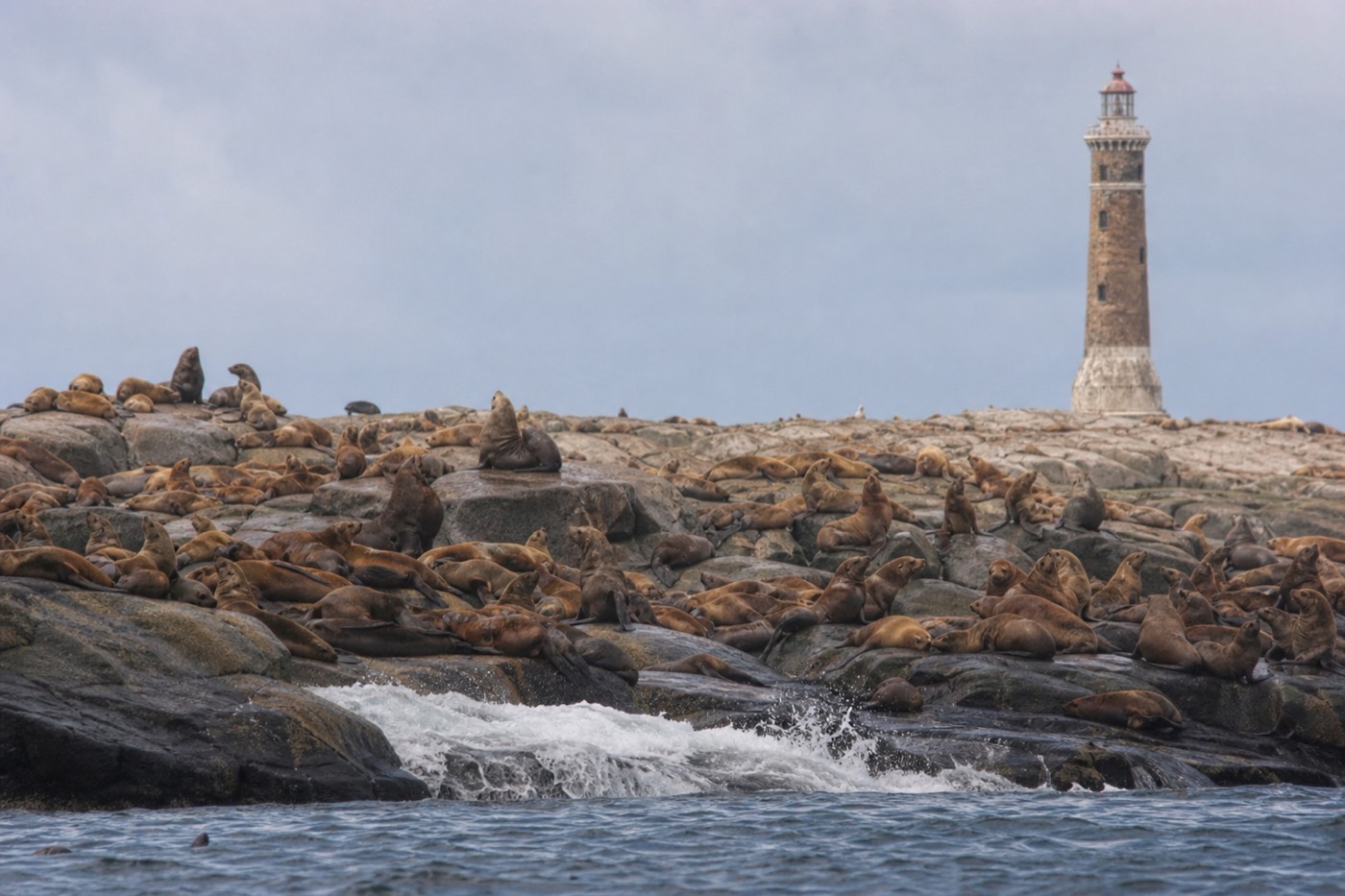
Eight kilometres southeast of the peninsula there is a low grey rock with a lighthouse on it and something like a quarter of a million sea lions around it. Almost nobody is allowed to set foot on Isla de Lobos, which is exactly why the boats go out to circle it.
Isla de Lobos by the numbers, and how far offshore it sits
Distance and island figures from the Wikipedia entry on Isla de Lobos. Colony counts are survey estimates that vary by year and source. The Isla Gorriti marker shows relative position only.
Which Isla de Lobos is this, and where exactly is it?
The Uruguayan Isla de Lobos sits about 8 kilometres southeast of Punta del Este, out in the open Atlantic in Maldonado Department. It is a low rock of roughly 0.435 square kilometres, topped by a tall nineteenth-century lighthouse and blanketed in sea lions. Three unrelated islands elsewhere in the world carry exactly the same name.
Spanish speakers call sea lions lobos marinos, sea wolves, so almost any rock where they haul out in numbers ends up named after them. That is why the bare phrase returns four different places on a map, and why so many travellers arrive at a page about a volcanic islet in the Canary Islands when what they wanted was the wildlife rock off Uruguay. The island described here is the Uruguayan one, documented on the Wikipedia entry for Isla de Lobos, and it belongs to Maldonado Department, the same administrative area as Punta del Este and Piriápolis.
Geography matters here more than it usually does, because 8 kilometres of open Atlantic is not a lagoon crossing. The peninsula of Punta del Este marks the point where the Río de la Plata gives way to the ocean proper, which is the same split that gives the resort its two very different shorelines. Anyone weighing up a boat trip should read the island's distance in that context rather than as a short hop, and the difference between the sheltered and exposed sides of the peninsula is set out in our comparison of Playa Brava and Playa Mansa.
| Island called Isla de Lobos | Country | Where it sits | What it is known for |
|---|---|---|---|
| Isla de Lobos, Maldonado | Uruguay | About 8 km southeast of Punta del Este, in the Atlantic | Enormous sea lion and fur seal colony, an 1858 lighthouse, no public landing |
| Isla de Lobos, Fuerteventura | Spain | Canary Islands, off the north coast of Fuerteventura | Volcanic islet reached by short ferry from Corralejo, walking and swimming |
| Isla de Lobos, Veracruz | Mexico | Gulf of Mexico, off the Veracruz coast | Small reef island associated with diving and fishing |
| Isla de los Lobos, Beagle Channel | Argentina | Beagle Channel near Ushuaia | Sea lion colony seen from the channel sightseeing boats |
Only the first of those has any bearing on a trip to Uruguay. If you are reading this while planning the wider trip, the rest of the coast is covered in our roundup of what there is to do around the peninsula.
How big is the sea lion colony on Isla de Lobos?
Very large by any measure. The Wikipedia entry cites a 2005 count of 250,000 South American sea lions and 1,500 South American fur seals, calling it the largest colony of both species in the western hemisphere. Lonely Planet describes it as the world's second largest southern sea lion colony, with roughly 200,000 animals at last count.
Those two figures do not match, and that is normal for wildlife counts on an island nobody is allowed to walk across. Colonies move, breeding seasons shift the numbers, and a survey taken from a boat or from the air in one month will not read the same as one taken six months later. Both sources agree on the scale, which is the part that actually affects your visit: this is a rock where animals are packed onto every usable ledge, and the noise carries across the water long before the individual shapes resolve.
The two species are easy to tell apart once you know what you are looking at. South American sea lions are the bulkier animals with the heavy manes on the adult males, and they take the flatter, more accessible ground. The fur seals are smaller, darker and denser in the coat, and they tend to hold the rockier edges. Around the island, the waters off Punta del Este also carry southern right whales in the colder months, southern elephant seals and orcas, which is why Lonely Planet's entry on the island treats it as a wildlife site rather than a scenic one.
| What is out there | The figure and its source | What it looks like from a boat |
|---|---|---|
| South American sea lion | 250,000 in the 2005 count cited by Wikipedia; about 200,000 per Lonely Planet | Dense brown mass across the lower rock, bulls with manes holding position, constant movement at the waterline |
| South American fur seal | 1,500 in the same 2005 count | Smaller and darker, usually on the broken rock rather than the open slabs |
| The lighthouse | 59 metres above sea level, built 1858, rebuilt 1906 | The single vertical line on an otherwise flat island, visible long before the animals are |
| Island itself | 0.435 square kilometres, high point 26 metres | Low, treeless, grey, with no beach worth the name |
| Surrounding waters | Southern right whales, elephant seals and orcas recorded in the area | Occasional and never guaranteed; whale sightings cluster in the colder months |
Why can't you land on Isla de Lobos?
Isla de Lobos is a protected reserve. Since 2024 it has formed part of the Island and Islet of Lobos and their Submerged Environment National Park, and hunting of marine life there was banned outright by law back in 1991. Access is controlled, so the ordinary visit is a boat that circles the island rather than a landing.
The restriction is not bureaucratic fussiness. A colony of this density is sensitive to disturbance at exactly the times people most want to see it, which is when pups are on the rock and bulls are holding territory. Panic movement in a packed colony crushes young animals. That is the reason landings are limited to permitted scientific and lighthouse-related access rather than left open to whoever hires a boat, and it is the same logic that governs restricted seabird islands worldwide.
The lighthouse adds a second layer. It went up in 1858, was rebuilt in 1906, and in July 2001 became the first automated lighthouse in Uruguay, running on solar power. An automated station still needs maintenance visits and still occupies the highest ground on the island, so the built part of the rock is not open ground either. There is also a votive chapel built in 1945 by German and Italian sailors, standing about 1,250 metres from the island, which is a curiosity most visitors never hear about.
What this means in practice is simple. Nobody sells you an afternoon on Isla de Lobos, and any offer that claims to put you ashore there deserves a second look. If your priority is actually setting foot on an island, the answer is the other one, and we cover it in the guide to the wooded island you can walk on.
What does a boat trip out to Isla de Lobos actually involve?
A circuit rather than a destination. Independent boat operators working out of Puerto de Punta del Este run launches that head southeast, loop the island at a distance the rules allow, hold position for photographs, and come back. Nobody disembarks. The whole point is the approach and the circuit.
Be clear about who runs what. Those departures belong to independent operators at the port, and they set their own schedules, prices and weather calls at the quayside. This site does not sell a boat trip to the islands and we are not going to pretend otherwise. What we list are land tours: the coastal and peninsula routes that stop at the port where the sea lions gather on the docks, take in the lighthouse district at the tip, and reach the viewpoints where the island shows on the horizon. You can see the full set on our page of guided tours in Punta del Este.
The practical sequence for a boat day looks like this. You go down to the port in the morning, ask at the kiosks and the boat operators along the dock which departures are running that day, and you accept that the answer depends on the wind. Small boats out of an Atlantic-facing harbour cancel readily and that is a good sign rather than a bad one. Once out, the run is exposed for its whole length, since there is no shelter between the peninsula and the island.
Some visitors combine the island question with a guided coastal day instead, and the full-day coastal run from Montevideo is the cheapest way to get the island in view: it lists Lobos Island lighthouse views from the port among its stops, alongside Piriápolis, Casapueblo and La Mano, from $49 per person at the time of writing. Check the live listing for current pricing.
How much does it cost to go to Isla de Lobos?
There is no single published fare we can quote honestly. Boat departures are sold at the port by independent operators whose prices move with season, boat size and fuel, so the figure comes from the quayside on the day. Everything else in the equation, including seeing sea lions for free at the harbour, does have a knowable cost.
This is the question that most often gets answered with a made-up number online, so here is the honest structure of it. The boat itself is a variable you price on arrival. What you can budget in advance is the travel to Punta del Este, the guided land options if you want commentary and transport handled, and the fact that the harbour sea lions cost nothing at all. Below is what the site can actually stand behind, drawn from published bus fares and the live tour listings we work with.
| How you see the sea lions | What it costs | What you get |
|---|---|---|
| Sea lions on the dock structures at Puerto de Punta del Este | Free | Wild animals at close range, no boat, no booking, any day of the year |
| Public bus, Montevideo to Punta del Este | Roughly $7 to $12 USD each way | Two to two and a half hours from Tres Cruces terminal, frequent departures |
| Full-Day Guided Tour from Montevideo | From $49 per person at the time of writing | Nine hours, Piriápolis, Casapueblo, the port with Lobos Island lighthouse views, La Mano |
| Sightseeing Adventure Day Trip from Montevideo | From $169 per group at the time of writing | Nine hours, private vehicle, Casapueblo, La Mano and free time at the port |
| Have It Your Way private tour, based in Punta del Este | From $280 per group at the time of writing | Up to 10 hours, local guide, starts at the port and the lighthouse district, fully flexible route |
| Boat departure to circle Isla de Lobos | Set by independent port operators, ask at the dock | The offshore circuit itself; weather dependent and not sold through this site |
Prices on the tours above were current at the time of writing and should be checked on the live listing before you commit. If you are coming from the capital and want the cost comparison in detail, we set it out in the guide to day trips that start in Montevideo.
Recommended tours by season
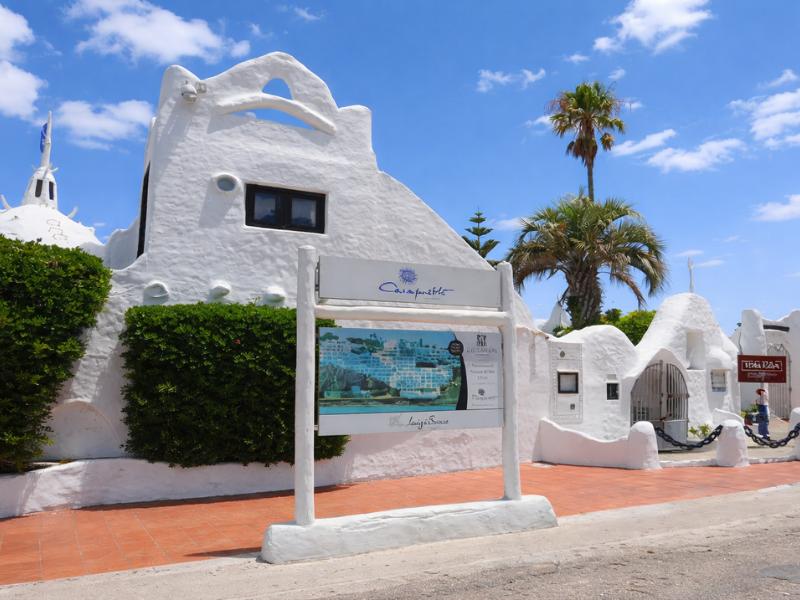
Montevideo to Punta del Este: Full-Day Guided Tour
A nine-hour coastal day from Montevideo that stops at the port for Lobos Island lighthouse views, then Piriápolis, Casapueblo and La Mano. A booked plan for the December to February weeks.
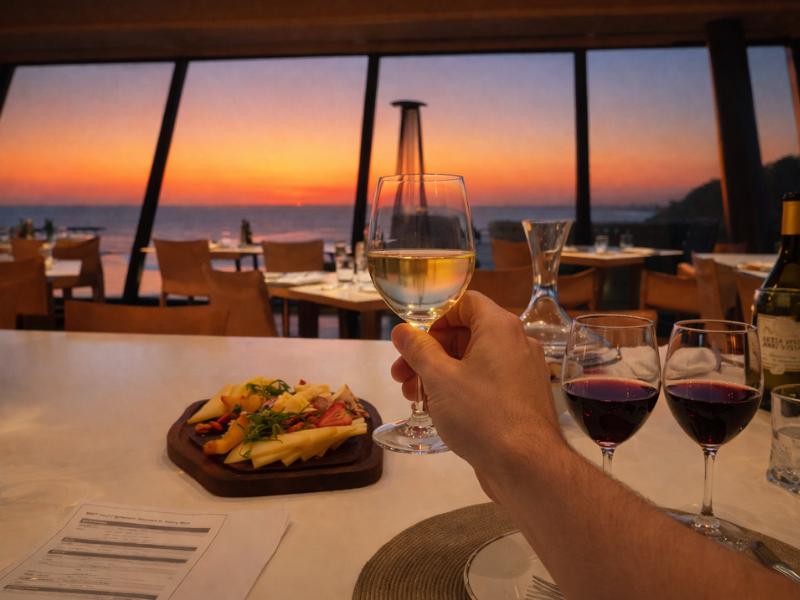
Punta Wine Lovers Tour – Exclusive Tastings & Vineyard Day
Four hours of tastings and vineyard time. Fits an afternoon in the shoulder months when the other half of the day is the port or a crossing.
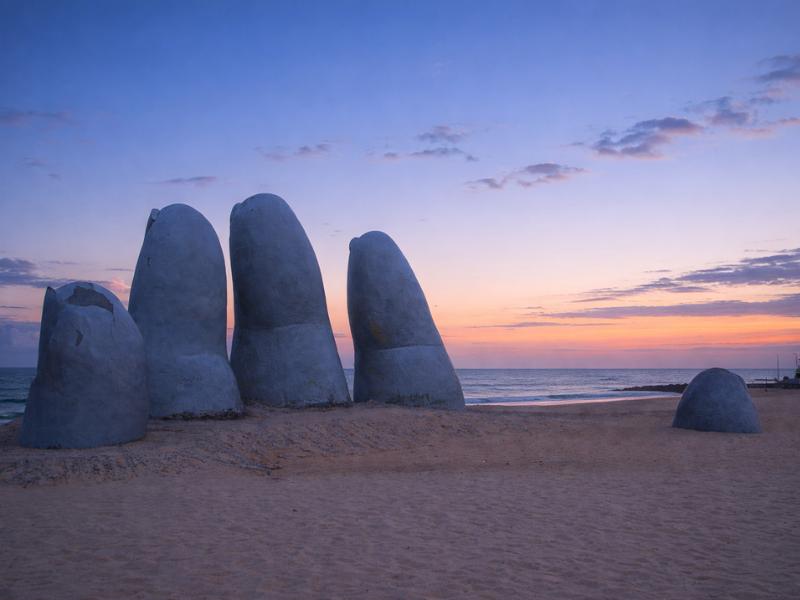
Have It Your Way Private Tour in Punta del Este
Up to ten hours with a local guide and private vehicle, starting at the port and the lighthouse district. A land route for the months when a crossing is a poor fit.
Montevideo to Punta del Este Sightseeing Adventure Day Trip
A nine-hour private day from Montevideo with Casapueblo, La Mano and free time at the port, where the harbour sea lions sit on the dock structures.
How long can you spend at Isla de Lobos?
On the island, none at all. Around it, as long as the operator's circuit runs and the sea allows. Because no one disembarks, the useful question is how long the whole excursion takes door to door, and that is a morning rather than a full day for most people who go.
The arithmetic that matters is the crossing. Eight kilometres each way in a small boat is short in distance and long in feel, because the boat slows for the circuit and slows again if the swell is running. Time spent actually alongside the colony is usually the smallest part of the outing, which surprises people who have budgeted the trip as though it were a beach day. Treat the table below as our own planning allowance rather than any operator's promise, and confirm the real timings with whoever is running the boat.
| Stage of the outing | Allow roughly | What determines it |
|---|---|---|
| Getting to the port and parking | 20 to 40 minutes in season | Peninsula traffic in January and February is the main variable |
| Finding the departure and confirming it is running | 15 to 30 minutes | Wind call of the day; several operators to ask along the dock |
| Outbound crossing | The bulk of the outward time | Boat type and sea state, not distance |
| Circuit of the island | The shortest segment of the day | Approach limits set by the reserve rules and the swell |
| Return crossing and disembarking | Similar to the outbound leg | Wind usually builds through the afternoon |
| Whole excursion, door to door | Plan a half day and keep the afternoon loose | Late starts and weather holds are common |
Because the outing eats a morning, most visitors pair it with something on land in the afternoon rather than stacking two boat activities. The clifftop terraces at Punta Ballena work well for that, and we cover the timing in the Casapueblo visiting guide.
When is the best time of year to make the crossing?
November, March and early April give the best balance. The sea is still warm, the peninsula is quiet, prices drop noticeably against high summer, and small boats are less likely to be turned back. December to February brings the most departures and the most crowding. Winter brings whales but rough water and thin schedules.
The pattern follows the wider season on this coast rather than anything specific to the island. High summer, December through February, is when Punta del Este runs at capacity: hottest weather, most boats moving, highest prices, longest queues everywhere on the peninsula. The shoulder months are the ones the site recommends generally, and they happen to suit a small-boat excursion too, since the water in March and April is still comfortable and the resort has emptied out.
Winter is the interesting edge case. Whale watching on this coast runs seasonally from around June to October, and the same cold months push southern right whales close enough to be seen from the cliffs. The trade-off is real: sea conditions are at their worst, daylight is short and departures thin out. Our fuller month-by-month breakdown lives in the guide to choosing when to visit the coast.
| Window | Conditions on the coast | What it means for an offshore trip |
|---|---|---|
| December to February | Hot, 28 to 35 degrees, peak crowds, highest prices of the year | Most boats running and most competition for them; expect a busy port and book other plans around it |
| March to mid April | Warm, 22 to 28 degrees, sea still 22 to 25 degrees, crowds gone | Our pick. Comfortable water temperature and the calmest practical combination of weather and availability |
| Late October to early December | Warm and bright, prices 30 to 60 percent below high season | Good value and quiet, though spring wind can cancel a morning outright |
| June to October | Cold, short days, whale watching season on this coast | Whales are the draw; small-boat comfort is at its worst and schedules are thin |
| Public holidays and Carnival | Peninsula at its most crowded | Port parking and departures both under pressure; go early or skip the day |
Who should think twice about the boat, and who should skip it?
Anyone prone to motion sickness should take this seriously. The route is 8 kilometres of unsheltered Atlantic each way in a small vessel that slows and turns while circling. Travellers with back problems, very young children and anyone on a tight schedule generally get more from the harbour and the coastal viewpoints.
Seasickness is the single most common regret reported on trips of this kind, and the shape of this outing makes it worse than a straight run: the queasy part is not the transit but the slow, beam-on circling at the far end, exactly when you want to be holding a camera. If you know you are susceptible, take the medication well before boarding rather than at the dock, stay on deck, keep your eyes on the horizon and skip a heavy breakfast.
The honest version of the advice is that this is a specialist outing. It rewards people who genuinely want the wildlife spectacle and will accept the discomfort and the weather risk to get it. It disappoints people who booked it as a generic boat trip, because there is no landing, no swimming and no beach at the other end.
| Traveller | Our read | Better use of the morning if you skip it |
|---|---|---|
| Wildlife photographers and birders | Go. This is the reason the boats exist | Not applicable |
| Confident sea travellers with a flexible day | Go, and pick a settled morning rather than a fixed date | Not applicable |
| Prone to motion sickness | Think hard. Medicate properly or watch from the harbour | Sea lions on the port dock, then the lighthouse district on foot |
| Families with under-fives | Usually not worth it. Nothing to do onboard and no landing | Calm swimming on the bay side and the harbour animals |
| Back or neck problems | Skip. Small boats slam in a short Atlantic chop | A private land tour that takes the coastal viewpoints at your own pace |
| One day only in Punta del Este | Skip. Weather risk can wipe out your only morning | Peninsula highlights, the port and Casapueblo |
Families weighing this up will find more of the same reasoning in our notes on visiting the coast with children.
What should you bring on an island boat trip?
Layers, real optics and sun protection, in that order. The Atlantic 8 kilometres out is colder and windier than the beach you left, spray reaches everything, and the animals stay far enough away that a phone camera returns grey smudges. Binoculars change the trip more than any other item.
The mistake people make is packing for the resort rather than for the water. Punta del Este in the afternoon can be 28 degrees on the sand and distinctly raw on an open deck heading into wind. A windproof outer layer matters more than a thick one. Everything you carry should be either waterproof or inside something that is, because spray on an exposed crossing is not occasional.
| Item | Why it earns its place | Skip it if |
|---|---|---|
| Windproof outer layer | Wind chill offshore is the thing people underestimate most | Never. Bring it even in January |
| Binoculars, 8x or 10x | The single biggest upgrade to what you actually see of the colony | You are bringing a long camera lens and will share it |
| Camera with real reach | Phones cannot bridge the distance the reserve rules impose | You are happy with the memory rather than the photograph |
| Dry bag or waterproof pouch | Spray hits the whole deck on the exposed legs | Nothing you carry minds salt water |
| Motion sickness medication | Has to be taken before boarding to do anything useful | You have tested yourself on small boats before |
| High SPF sunscreen and sunglasses | UV on this coast is strong and water doubles the exposure | Never on a daytime departure |
| Water and a snack | Nothing is sold offshore and departures can run late | Very short outing confirmed in advance |
| Cash in small notes | Port operators and parking are not reliably card friendly | You have confirmed payment method in advance |
Is it better to just watch the sea lions at the port for free?
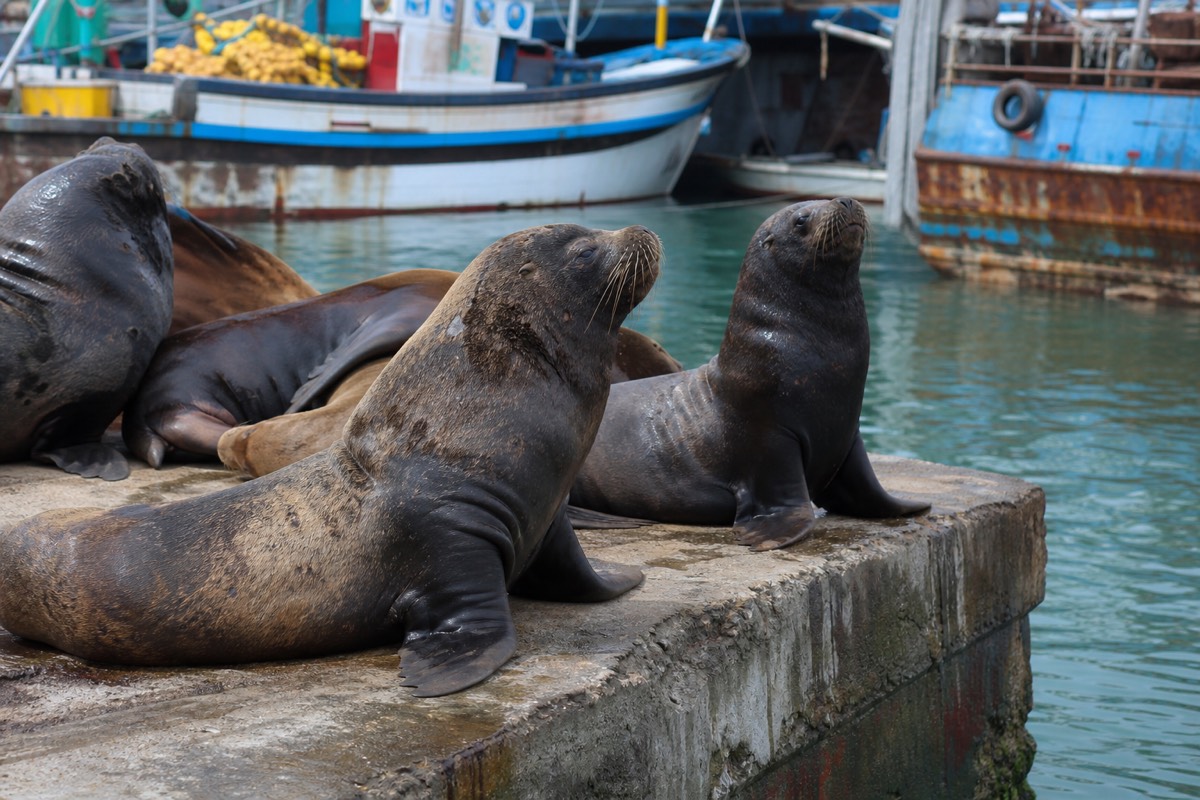
For many visitors, yes. Sea lions have colonised the dock structures at Puerto de Punta del Este and sit there at close range, costing nothing, requiring no booking and immune to the weather. The island gives you scale and a lighthouse. The harbour gives you proximity and reliability.
This comparison is the one most guides avoid, because the free option is genuinely good. The harbour animals are wild, unfenced and close, and the whole scene is part of what makes the marina worth an hour: yachts, fish stalls, and a population of sea lions entirely indifferent to both. Every coastal tour we list stops there, which tells you something about how reliably it delivers.
What the harbour cannot give you is the sight of a whole island covered in animals, with a 59-metre lighthouse rising out of the middle of it. That is a different order of spectacle and it is the reason serious wildlife travellers take the boat despite the cost, the seasickness and the weather risk. Decide which of the two experiences you are actually after before you spend a morning finding out.
| Factor | Sea lions at the port | Boat circuit of Isla de Lobos |
|---|---|---|
| Cost | Free | Operator fare set at the dock |
| Reliability | Any day, any weather | Weather dependent, cancellations normal |
| Distance to the animals | Very close, metres in places | Held offshore by reserve approach rules |
| Number of animals | A handful to a few dozen | Hundreds of thousands, per the published counts |
| Time cost | Twenty minutes on a walk you were doing anyway | Half a day including the wait and the crossing |
| Photography | Phone photographs work fine | Needs real reach and a steady hand |
| Suits | Families, short visits, anyone on one day | Wildlife enthusiasts with time and a settled forecast |
How do you photograph a colony from a moving boat?
Shutter speed first, everything else second. A boat rolling under you and animals moving at distance means anything below roughly 1/1000 of a second returns soft frames. Raise the ISO without hesitation, shoot in bursts, and forget the tripod entirely: it is useless on a deck.
Reach is the second constraint. The reserve rules hold boats at a distance that flatters nobody's phone, so the practical minimum for frame-filling shots of individual animals is a long telephoto. Without one, change the target: shoot the island as a whole, with the lighthouse and the mass of bodies as texture. Those wide frames often say more about the place than a tight portrait of one bull would.
Light on this coast rewards early departures. Morning gives you the sun behind you on an eastward run and calmer air before the afternoon wind builds. Salt spray on the front element is the quiet ruin of many island photographs, so carry a lens cloth in a sealed bag and check the glass between bursts rather than after.
One thing worth accepting in advance: you will not beat the published photographs of this island, because most of them were taken from permitted access nobody else gets. Shoot for your own record, not for a competition.
What are the rules for behaving around the colony?
The rules do most of the work for you here, since the boat cannot approach beyond the limits the reserve sets. What is left to the passengers is noise discipline, no flash toward the rock, nothing thrown overboard, and accepting the skipper's call on approach without pushing for a closer pass.
Disturbance in a dense colony is not a matter of animals looking annoyed. A sudden stampede toward the water crushes pups and separates mothers from young, and a boat that pushes in for a better angle can trigger exactly that. The 1991 hunting ban and the 2024 national park designation exist because this population was exploited heavily in the past, and the recovery is the whole reason the spectacle still exists.
A quieter point, worth raising because visitors ask: the smell is intense and entirely natural, and complaining about it at volume tends to be the thing that makes other passengers regret the trip. Wildlife travel means taking the place as it is. Uruguay treats this island as national heritage alongside its wooded neighbour, and the standard expected of visitors reflects that.
If wildlife is what is drawing you to this coast, the seasonal whale window is the other genuine draw, and the coastal viewpoints that work for it are covered across our honest assessment of the destination.