What Is Punta del Este Famous For?
Four things carry almost all of this town's international recognition, and one of them is a hand sticking out of a beach. Here is the honest list, and the reputation check that goes with it.
What is Punta del Este famous for?
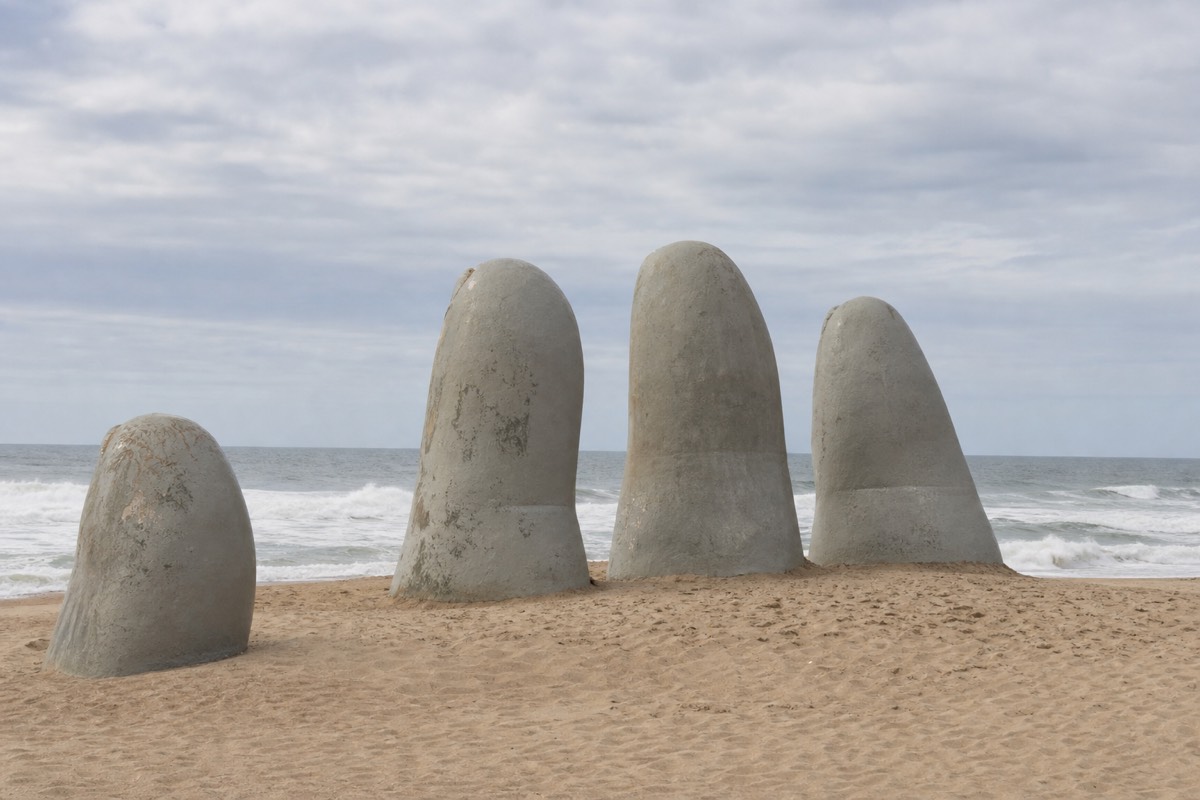
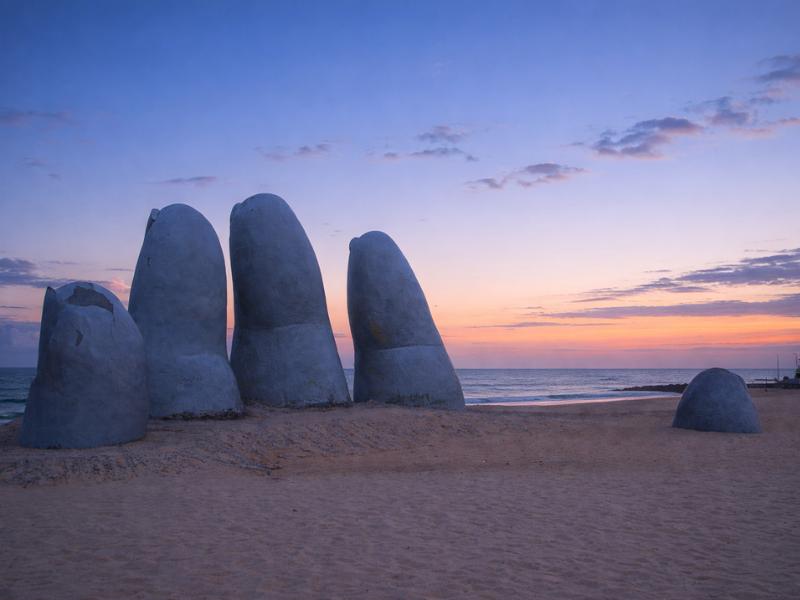
Punta del Este is famous as South America's best known Atlantic beach resort, recognised above all for La Mano, the giant concrete fingers rising out of the sand on Playa Brava, the white cliffside sculpture-house of Casapueblo at Punta Ballena, its yacht harbour with a resident sea lion colony, and a January high season that draws visitors from across the region. Those four things carry almost all of the recognition. Everything else people associate with the town, the nightlife, the restaurants, the property, sits downstream of them.
The town occupies a narrow peninsula on Uruguay's southeastern coast, roughly 130 kilometres east of Montevideo along the Ruta Interbalnearia, at the point where the Río de la Plata gives way to the open Atlantic. That single geographic accident produced the two coastlines, the sheltered harbour and the surf beach that the postcards use. Uruguay's own tourism material and the reference profile of Punta del Este both describe it in resort terms rather than as a city, which is the right way to read it.
Fame here is unusually concentrated. Six hours and a camera put you in front of every landmark below, which is why the day trip out of Montevideo dominates the market. The most booked of the guided tours of Punta del Este we list has passed 11,156 bookings, and its route is essentially this table in order.
| Landmark | What it actually is | Where | Time to allow |
|---|---|---|---|
| La Mano | Concrete hand and fingers emerging from the beach, installed 1982 | Playa Brava, town side | 15 to 30 minutes, free |
| Casapueblo | Artist's home, hotel and museum built in white organic forms on a cliff | Punta Ballena, about 12 km west | At least 90 minutes |
| Puerto de Punta del Este | Working yacht harbour with a sea lion colony on the dock structures | Peninsula tip | 45 to 90 minutes with lunch |
| Playa Brava and Playa Mansa | Open Atlantic surf on one side, sheltered bay water on the other | Either side of the peninsula | Half a day if you swim |
| Gorlero Avenue | The main commercial street through the peninsula | Peninsula spine | 30 minutes on foot |
Those allowances are our own planning figures, not operator promises.
Why is La Mano the image everyone recognises?
La Mano is the single image most associated with Punta del Este internationally because it is enormous, free, permanently accessible and photographs perfectly from any angle. Chilean artist Mario Irarrázabal installed it on Playa Brava in 1982, and the five fingers reading as human scale from a distance before resolving to roughly ten times that size up close is the whole trick.
Locals call it Los Dedos, the fingers. There is no ticket, no gate and no opening hour: it stands on a public beach, with free street parking nearby and paid lots in summer. What changes is the light and the queue. Early morning and late afternoon give golden light and a thin crowd; midday from December to February means waiting your turn.
The sculpture also puts you on Playa Brava, the rougher of the two beaches, which is not where most people should then spend the afternoon. Almost everyone photographs the hand on Brava and swims on Mansa, and that is a sensible sequence rather than a compromise. If you want the full picture on which side suits you, how the two beaches compare goes into it properly.
What makes Casapueblo more than a photo stop?
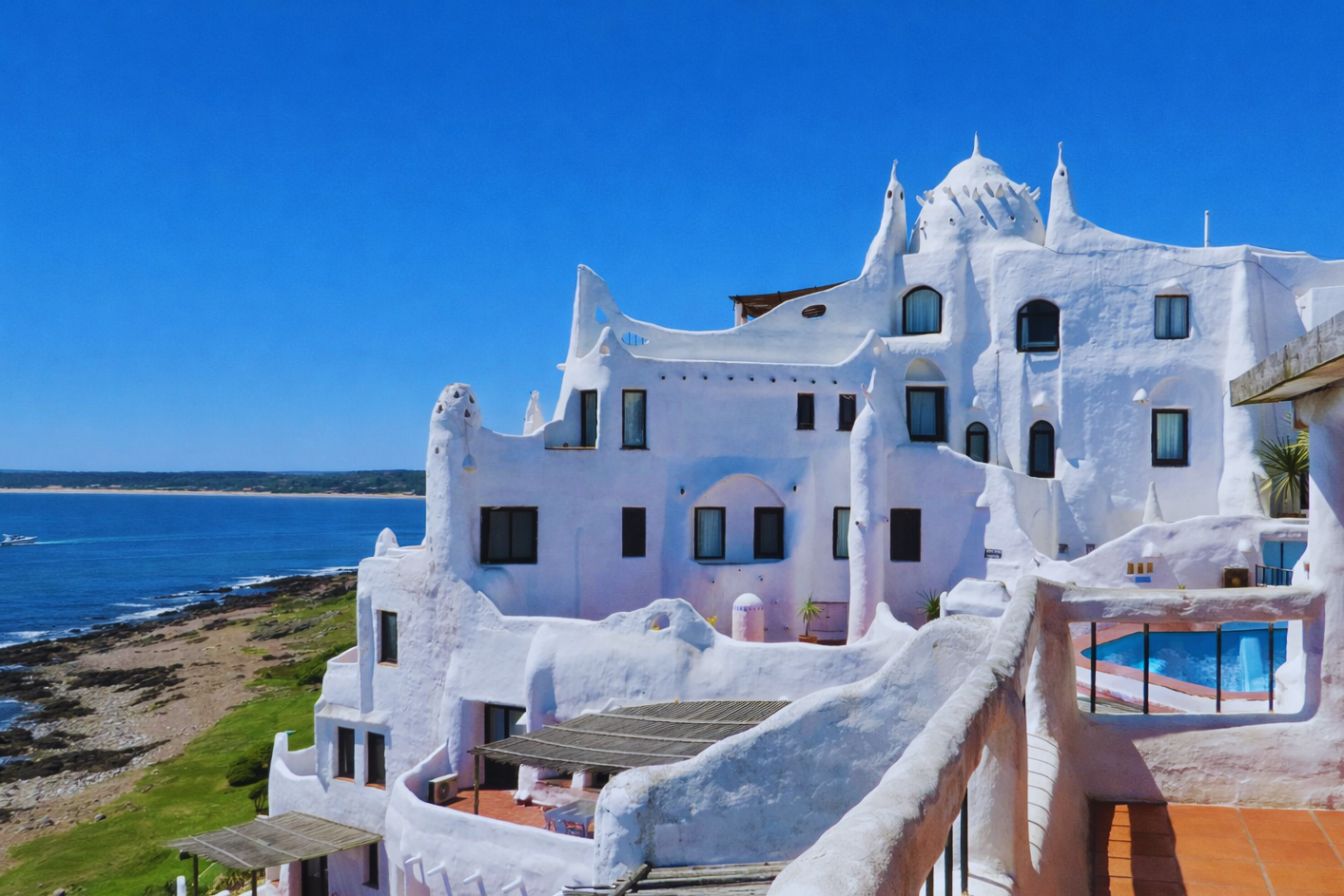
Casapueblo is a white, curved, multi-level compound that the Uruguayan artist Carlos Páez Vilaró began building into the cliffs of Punta Ballena in 1958 and kept adding to for the rest of his life. It is now a hotel and museum, and it is the one landmark here that rewards hours rather than minutes. The building owes nothing to rectangles and everything to the shapes of sand and waves.
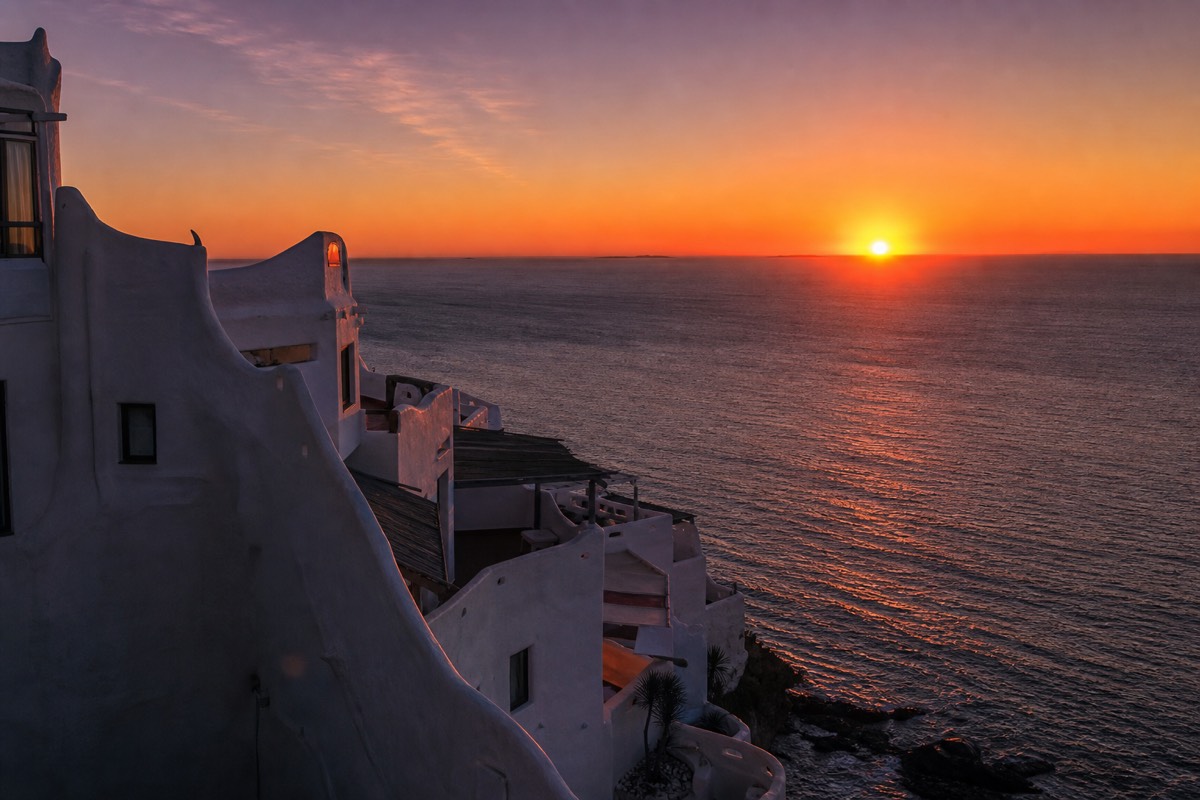
The story behind it is not separable from the architecture. Vilaro lived and worked there for decades, and the museum inside holds his paintings alongside the account of his life, including the 1972 Andes plane crash in which his son was among the survivors. Guides who explain that before you walk the terraces change what the place feels like. Background on the building itself and on the artist who made it is worth reading before you go.
Practically: it opens at 10:00 AM year round, and arriving at opening on a weekday gives you the terraces almost empty, because the coach groups arrive from late morning. Midday between 11:00 AM and 4:00 PM in high season is the crush. Sunset on the terrace with a drink is the part visitors most often say they remember, and it is also the busiest slot of the day. Plan at least 90 minutes, more if you stay for the light. There is a fuller breakdown in our Casapueblo visiting guide.
Why is Punta del Este famous for having two opposite beaches?
The peninsula sits exactly where the Río de la Plata meets the open Atlantic, so the town has two coastlines with completely different water. Playa Mansa faces west into the sheltered bay and stays calm and shallow. Playa Brava faces east into open ocean, with proper waves, a strong undertow and red flags posted regularly.
That contrast is part of why the resort works. You can watch the sun drop behind Isla Gorriti from mirror-flat water in the afternoon, having spent the morning on a surf beach a ten minute walk away. Families and weak swimmers gravitate to Mansa; surfers and photographers go to Brava.
The practical read: Mansa is for swimming and sunsets, Brava is for looking at. Red flags on Brava are not decorative, and the undertow catches out confident swimmers who assume a warm day means safe water.
What is the yacht harbour known for besides boats?
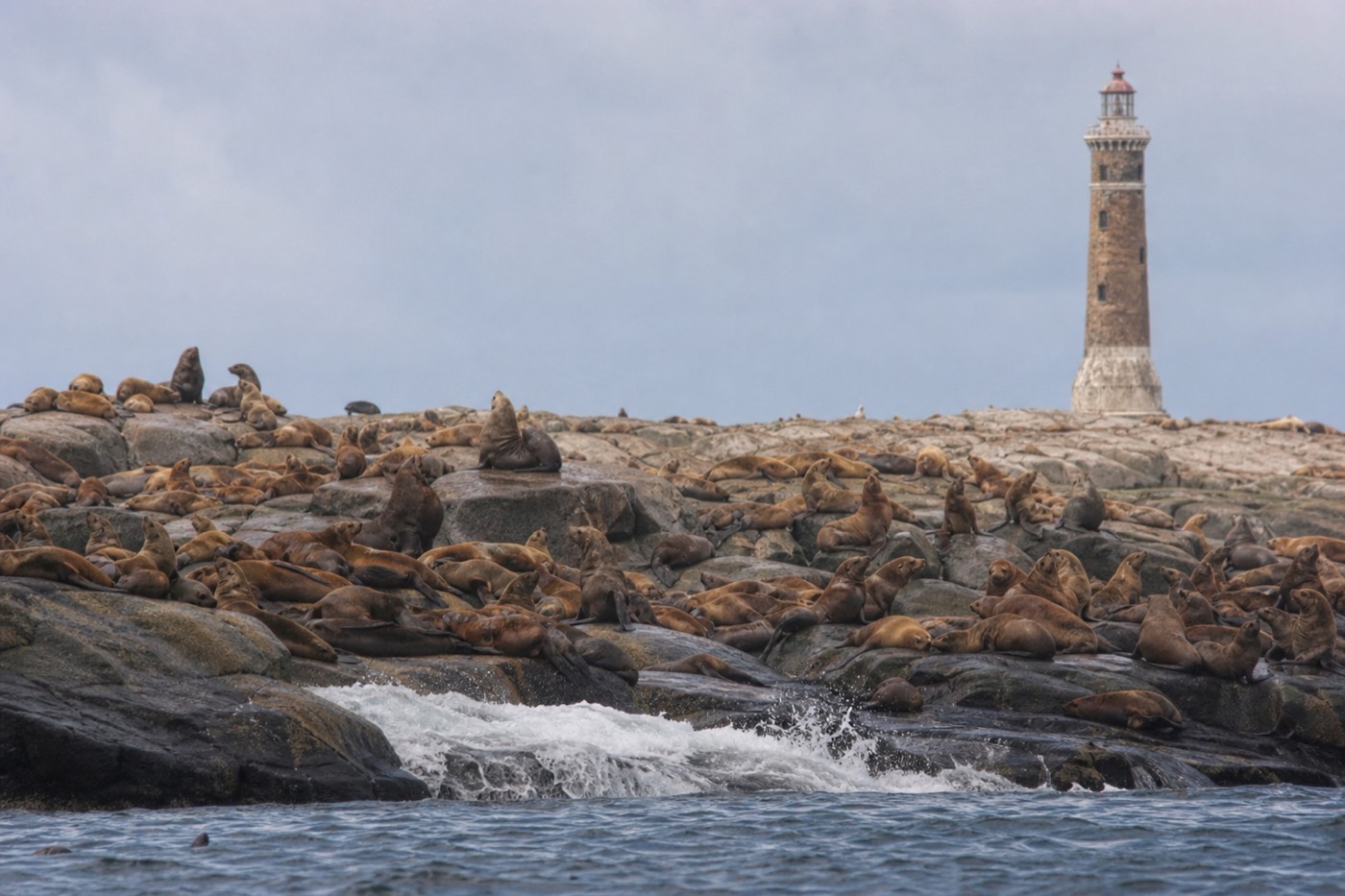
Puerto de Punta del Este is famous for two things at once: a marina holding yachts at a scale that signals real money, and a colony of sea lions that has taken over the dock structures at the harbour entrance and is completely indifferent to them. The pairing is why the port stop lands so well.
The sea lions are the surprise for most first-time visitors, who came for the boats and leave talking about the animals. They cluster near the fish market stalls and the docks, they smell exactly as you would expect, and they are unambiguously charming. Guides explain the colony's history and the municipal ambivalence about a population that is both nuisance and mascot.
The harbour is also where the day tours park you for lunch. Waterfront restaurants and casual stalls sit along the docks, fresh seafood is the obvious order, and local snacks like pasteles are what the guides push you toward. On a clear day you can see the Isla de Lobos lighthouse offshore from the port, which is the closest most visitors get to the far larger sea lion colony out there.
Recommended tours by season
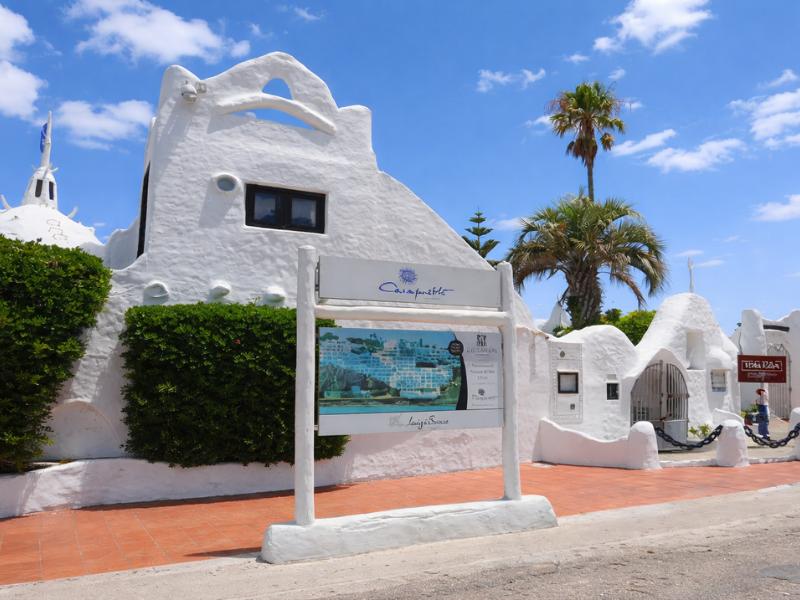
Montevideo to Punta del Este: Full-Day Guided Tour
The nine-hour group departure from Montevideo for a summer visit: Casapueblo, the port, La Mano and Playa Mansa in one run.
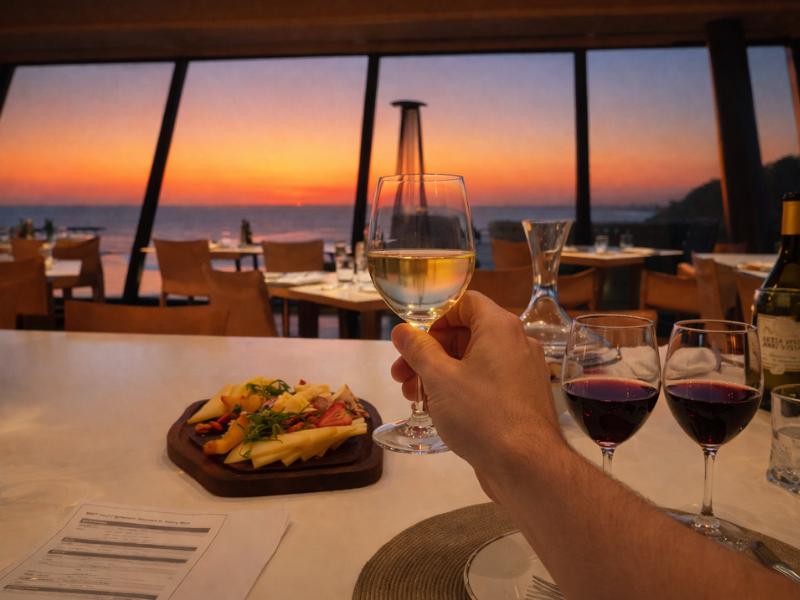
Punta Wine Lovers Tour – Exclusive Tastings & Vineyard Day
A four-hour vineyard day that fits March, April or November, when you have time beyond the landmark circuit.
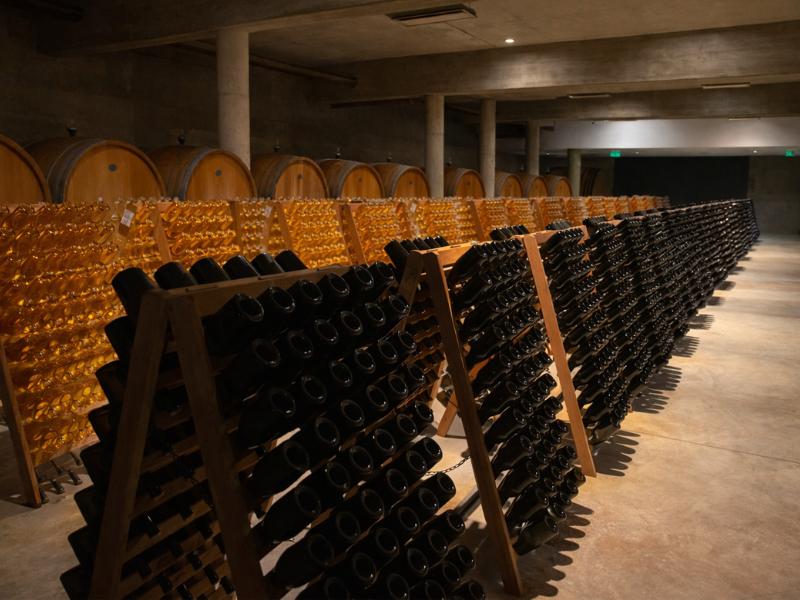
Bodega Garzón Wine Lovers Tour – Exclusive Tastings & Pairings
Seven hours of tastings and pairings inland at Bodega Garzón, for months when the Atlantic coast is not the reason to come.
Have It Your Way Private Tour in Punta del Este
A flexible private day if you are already staying on the coast and want both beaches, La Mano, the port and Casapueblo on your own schedule.
Is the glamorous summer reputation actually true?
Yes, but only for about ten weeks a year. From late December through February, Punta del Este runs at full intensity: packed beaches, queues at La Mano and Casapueblo, restaurant waits, difficult parking, and accommodation prices that surge well above the rest of the year. For the other nine months it is a calm, spacious coastal town.
This is the thing first-timers most often get wrong. Arriving in January expecting a quiet beach escape produces genuine disappointment. Arriving in January wanting the buzz produces exactly what was advertised. The peaks inside the peak are late December to early January, and February around Carnival.
The counter-move is the shoulder. November, March and early April keep warm, sunny days and sea temperatures that are still comfortable for swimming, while accommodation and tour prices drop substantially and the landmarks empty out. Our advice is March or November rather than January; there is a month-by-month case for it in our guide to timing a Punta del Este trip.
Why do people call it the St Tropez or the Hamptons of South America?
Those are nicknames, not classifications. Travel writers, operators and the town's own marketing reach for St Tropez, the Hamptons, Monaco and Miami to communicate one specific idea quickly: an expensive, summer-seasonal, socially visible beach resort that a wealthy metropolitan population decamps to for a few weeks a year. Each comparison gets part of it right and part of it wrong.
| Nickname | What it gets right | Where it misleads |
|---|---|---|
| St Tropez of South America | Summer-only social intensity, yacht harbour, seen-and-be-seen dining | Punta is far larger and more built up than a Mediterranean village |
| The Hamptons of South America | A capital city's population relocating for the season, second homes | The crowd is regional and international, not from one nearby city |
| Monaco or Miami of the south | High-rise waterfront, marina, casino and nightlife | Punta empties almost completely outside summer, which neither does |
| Pearl of the Atlantic | Its standing as Uruguay's flagship coastal destination | Purely promotional, tells you nothing practical |
Use them as shorthand and nothing more. If you like the idea of a resort town that a large regional population treats as its summer address, you will read Punta correctly. Arrive expecting a European riviera in miniature and the scale will surprise you.
What is Punta del Este not famous for?
It is not a tropical destination. Punta del Este sits well south in the temperate Atlantic, the water on the Brava side is cool and rough rather than bathwater warm, there is no reef, no jungle and no colonial old town, and outside the summer months it is not a beach destination at all. Setting that expectation early saves a lot of disappointment.
| What visitors often expect | What is actually true |
|---|---|
| Caribbean-style warm, clear water | Temperate Atlantic and river water, comfortable for swimming mainly in high summer and the shoulder months |
| A year-round beach resort | A genuinely seasonal town, at full volume roughly December to February |
| Historic colonial streets | A modern resort peninsula; the colonial material in Uruguay is in Montevideo and Colonia |
| Cheap South American prices | Uruguay is affordable by European standards, but Punta in January is the most expensive place in the country |
| Wildlife as the main event | Sea lions at the port and seasonal whales off the cliffs are a bonus, not the reason people come |
None of this argues against going. It argues for going with the right frame and the right month: the resort is good at what it is, and less good at things it never claimed to be. For the fuller picture of daily life there rather than which sights carry the name, read what the place is actually like.
How do most first-time visitors see all of this?
The overwhelming majority arrive as day-trippers from Montevideo, roughly two hours away by road, on a guided full-day tour that covers Casapueblo, the port, La Mano and Playa Mansa in one run. That is why the nine-hour group day trip out of Montevideo outsells every other product on this site by a wide margin.
The economics explain it. The shared small-group full-day tour starts from $49 per person at the time of writing, runs nine hours, holds a 4.5 rating across more than 11,000 bookings, and includes the coastal drive, a guide, the Piriápolis and Punta Ballena stops, and free time in town. Private alternatives from Montevideo start around $169 per group for nine hours, which works out cheaper per head for a couple. Check the live listing for the full-day tour for current pricing, because these move with the season.
If you are already staying on the coast, the local private option fits better, at around $280 per group for a flexible day covering both beaches, the sculpture, the port and Casapueblo at your own pace. One day covers the famous list. Whether that is enough is a separate question, and we work through it in how long to give Punta del Este.