Where to Stay in Punta del Este
Punta del Este is not one place. The peninsula, the two coastlines, the villages east of the wavy bridge and the working town inland are different holidays, and the choice is about your trip rather than your address.
Where should you stay in Punta del Este?
Match the area to the trip rather than hunting for the best address. The peninsula suits first-timers and anyone without a car, the Playa Mansa side suits families, La Barra suits late nights, José Ignacio suits quiet and money, Maldonado suits budgets, and basing in Montevideo suits anyone who only wants one coastal day.
Punta del Este means genuinely different things depending on where you sleep, and that point is more useful to a first-timer than any list of properties. The resort is not one place. It is a compact peninsula, two coastlines with opposite personalities, a string of villages running east and a working inland town.
We do not book accommodation and have no stake in where you stay, so what follows is area character rather than property recommendations.
| Area | Roughly where | Character | The trade-off |
|---|---|---|---|
| The peninsula | The town centre itself | Walkable, central, both beaches, the marina, the main avenue | Busiest and most built-up, especially December to February |
| Playa Mansa side | West of the peninsula, river-facing | Calm shallow water, big beachfront blocks, family rhythm | Less atmospheric streetlife than the peninsula core |
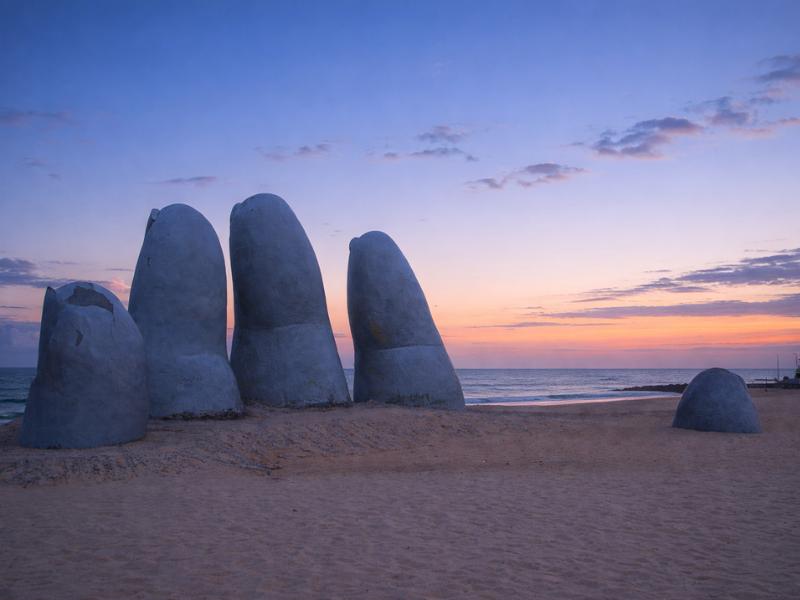
| Playa Brava side | East of the peninsula, Atlantic-facing | Surf, open horizon, La Mano on the sand | Rougher water, exposed to wind |
| La Barra | About 10 km east across the wavy bridge | Younger, arty, restaurants, Sunday artisan market | Strongly seasonal, quiet outside summer |
| Manantiales and José Ignacio | A further 35 km east along the coast | Quiet, expensive, low-key, wide empty beaches | Remote, and effectively car-only |
| Maldonado | The inland town behind the resort | Working Uruguayan town, cheaper, real shops | Not on the beach and not scenic |
Why does the peninsula work best for first-time visitors?
The peninsula puts both beaches, the yacht harbour, La Mano and the main avenue within walking distance of each other. For a first visit, and for anyone without a car, that concentration removes almost every transport decision and is worth more than a quieter address further out.
Punta del Este sits on a narrow finger of land where the Río de la Plata meets the open Atlantic. That geography is why the peninsula is so convenient: the calm side and the wild side are minutes apart on foot, and the harbour sits at the tip between them.
The cost is intensity. In high summer this is the busiest part of the busiest resort in Uruguay, with full restaurants, difficult parking and heavy foot traffic around La Mano. In November or March the same streets feel spacious. The peninsula in January and the peninsula in March are two different holidays at the same address.
For a first visit focused on the classic version of the place, the peninsula or the immediate resort area is the right base, and you can fill the days easily from the Punta del Este tours we feature without ever renting a car.
Should you stay on the Playa Mansa side or the Playa Brava side?
Mansa if you want to swim, Brava if you want the view. Playa Mansa faces the bay and stays calm and shallow, which makes it the swimming and family side. Playa Brava faces the open Atlantic with proper waves, stronger undertow and regular red flags.
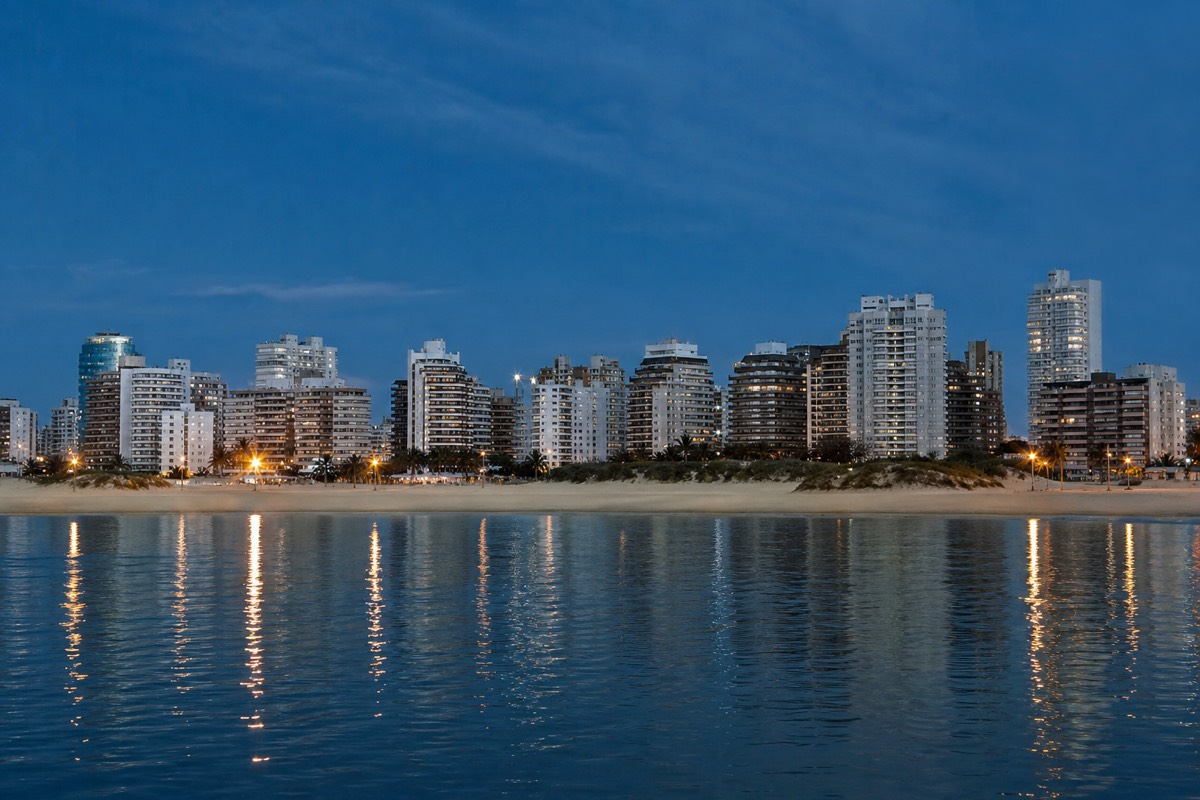
This is not really about the hotel. It is about which water is outside your door every morning. Mansa is protected by the peninsula and a sandbar, so it often stays knee-deep a long way out, and the afternoon light over Isla Gorriti is the best sunset in the resort. Brava is dramatic, wide and loud, popular with surfers, and not a casual swimming beach.
Most visitors do both regardless: the La Mano photograph on Brava, then beach time on Mansa. That is a sensible pattern rather than a compromise, and it is how the guided itineraries sequence the day. Our fuller breakdown of the difference between Brava and Mansa goes further into conditions and flags.
The Mansa side carries most of the large beachfront developments and reads calmer and more residential. The Brava side is more exposed and windier, which some people specifically want.
Is La Barra a base or just a night out?
La Barra works as a base for younger travellers and anyone whose evenings matter more than their mornings. It sits about ten kilometres east of the peninsula across the wavy bridge, with a bohemian streak, strong restaurants and a Sunday artisan market, and it empties noticeably outside the summer months.
The Leonel Viera bridge is the boundary marker, an undulating structure that makes the road physically rise and drop as you cross it. Once over it, the tone changes. La Barra is lower-rise, more design-led and more seasonal than the peninsula, and its bars and restaurants carry the late end of the coast's nightlife.
The Sunday market is the single best reason to be there. The artisan feria runs from mid-morning to sunset along the main road with handmade jewellery, leather, ceramics and street food, and it only happens on Sundays and some public holidays. Plan the visit accordingly, whether you are staying there or not, and read what La Barra is actually like before committing a whole trip to it.
The honest warning is seasonality. Outside December to February a good part of La Barra shuts, and staying there in June because the photographs looked good in January is a mistake we hear about regularly.
Are Manantiales and José Ignacio worth being that far out?
Only with a car and a specific reason. José Ignacio sits roughly 35 kilometres beyond La Barra, and Manantiales between the two. Both are quiet, expensive and genuinely low-key, with wide beaches and no resort infrastructure. Without a vehicle you are stranded, and every excursion becomes a long drive.
José Ignacio is the address that people who already know Uruguay tend to choose. It is a small village on a headland with a lighthouse, a handful of restaurants that book out in January, and beaches that stay empty by Punta del Este standards. Manantiales, closer in, is quieter than La Barra and less remote than José Ignacio.
The distance is the whole story. Here is how car-dependent each area is, framed as our own planning judgement rather than an operator rule.
| Area | Manageable without a car? | What you would rely on |
|---|---|---|
| The peninsula | Yes, easily | Walking, occasional taxi to Casapueblo |
| Playa Mansa side | Mostly | Walking plus short taxi rides into the centre |
| Playa Brava side | Mostly | Walking plus taxis |
| La Barra | Workable in summer | Taxis and local buses along the coast road |
| Manantiales | Difficult | A car, or taxis at real cost |
| José Ignacio | No | A car for everything |
| Maldonado | Workable | Local buses to the beaches |
If the eastern villages appeal but the logistics do not, treat them as an outing instead. A day out to José Ignacio from a peninsula base gives you the atmosphere without the car dependence.
Recommended tours by season
High summer on the peninsula, a quieter shoulder-season base, a wine day inland, or a single coastal day from Montevideo.
Have It Your Way Private Tour in Punta del Este
Private full day from a Punta del Este base. The beaches, harbour, Maldonado historic core and Casapueblo, at your own pace.
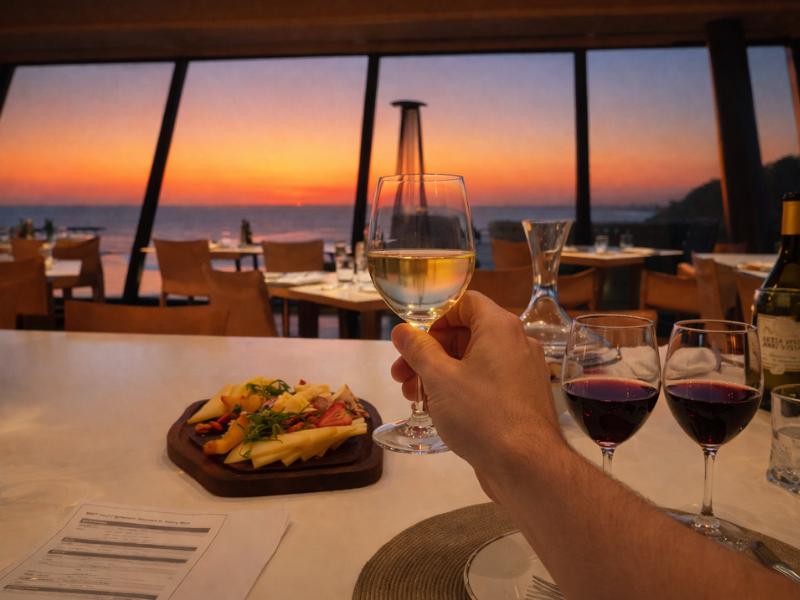
Punta Wine Lovers Tour – Exclusive Tastings & Vineyard Day
A four-hour vineyard day with tastings, run from the Punta del Este area.
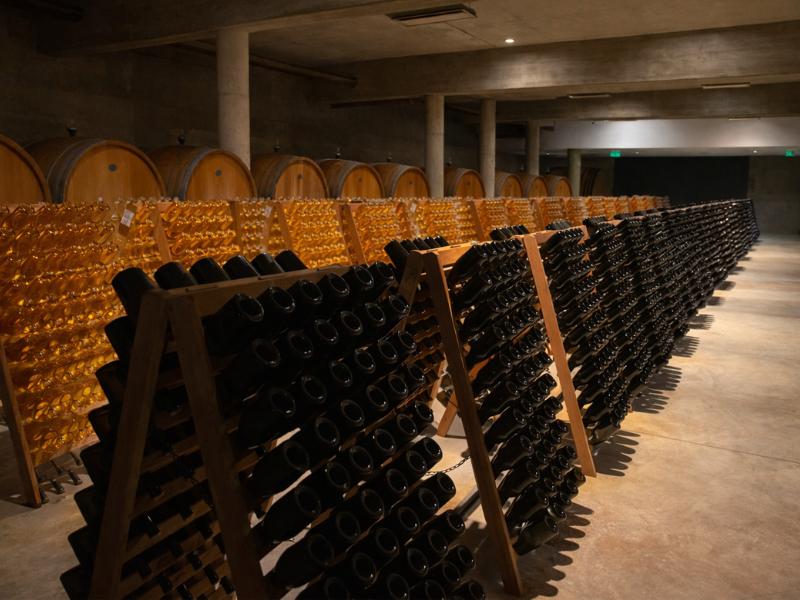
Bodega Garzón Wine Lovers Tour – Exclusive Tastings & Pairings
A seven-hour day of tastings and pairings at Bodega Garzón.
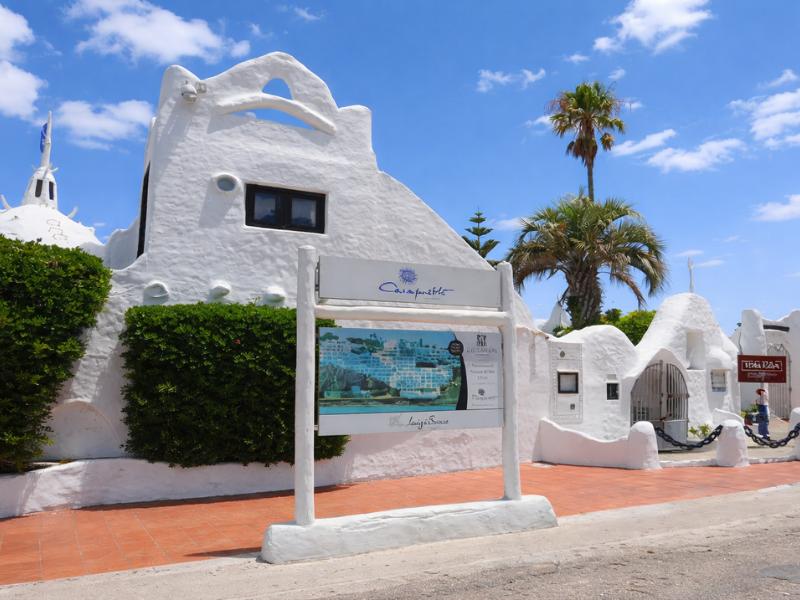
Montevideo to Punta del Este: Full-Day Guided Tour
Nine hours from Montevideo via Piriápolis and Casapueblo, with time at Playa Mansa, the harbour and La Mano.
Does staying in Maldonado save enough to be worth it?
Sometimes. Maldonado is the working town inland from the resort, cheaper than the coast and served by local buses, with real shops, a cathedral and everyday Uruguayan life. It is not on the beach and it is not scenic, so the saving buys distance from the thing you came for.
Maldonado gives the department its name and predates the resort entirely. The San Fernando cathedral and the Cuartel de Dragones, where the national hero Jose Gervasio Artigas began his military career, both sit here, and local guided tours routinely include them. It is a real town rather than a seasonal strip, so it stays open all year and prices behave normally.
For budget travellers, long stays or anyone visiting outside high summer, that is a genuine advantage. For a short beach holiday, a daily bus ride each way to reach the sand usually cancels out the saving. The Maldonado department covers the whole area, so a Maldonado address is still part of the same region.
Our rough test: if you are staying a week or more, or travelling outside December to February, Maldonado deserves consideration. For three nights in January, stay where the beach is.
Should you base in Montevideo and day-trip instead?
Yes, if Punta del Este is one item on a wider Uruguay trip rather than the trip itself. The coast sits about 130 kilometres east of Montevideo, and guided day tours run nine to ten hours, covering Casapueblo, the harbour, La Mano and both beaches without an accommodation change.
This is the option most articles skip, and it suits more people than it gets credit for. With three or four days in Uruguay, splitting them between two bases costs a packing cycle and a transfer each way, and the peninsula highlights do fit inside one long day.
The nine-hour guided coastal run from Montevideo is the cheapest way to do it, at $49 per person at the time of writing, with a guide on board and roughly three hours of free time in Punta del Este. For couples and small groups the private sightseeing day trip is priced per group instead, which can work out lower per head while adding door-to-door pickup.
What a day trip cannot give you is the evening. Punta del Este after dark, the harbour at dusk, sunset drinks at Casapueblo, is the part that gets left behind.
Which area matches your kind of trip?
Families should look at the Playa Mansa side, first-timers and car-free travellers at the peninsula, nightlife travellers at La Barra, couples wanting quiet at Manantiales or José Ignacio, budget travellers at Maldonado, and anyone on a wider Uruguay itinerary should consider staying in Montevideo entirely.
The grid below is our own read rather than an industry standard, and it assumes a stay of two to five nights.
| Traveller | Best area | Why |
|---|---|---|
| Family with young children | Playa Mansa side | Calm shallow water and a short walk to the sand |
| Couple, first visit | The peninsula | Everything walkable, both coastlines, the harbour at dusk |
| Couple wanting quiet | Manantiales or José Ignacio | Empty beaches and no resort noise, with a car |
| Nightlife first | La Barra | Bars and restaurants concentrated, and the Sunday market |
| Budget or long stay | Maldonado | Year-round prices and a real town |
| Travelling without a car | The peninsula | Walkable centre, taxis short and cheap |
| One coastal day in a wider trip | Montevideo | A nine to ten hour guided day covers the highlights |
If you are staying on the peninsula and want the wider region without driving it yourself, a private guide for a flexible day on the coast covers the beaches, the harbour, Maldonado's historic core and Casapueblo at your own pace.
Does the season change which area you should pick?
Considerably. In December to February every area functions and the peninsula and La Barra run at full intensity. In the shoulder months of November, March and April the coast quietens, prices drop by 30 to 60 percent, and the seasonal areas east of the bridge thin out or close.
Our standing advice is to visit in March or November rather than January. The sea is still warm enough to swim, the beaches are far less crowded, and the character of the place shows through instead of the crowd. That advice also changes the accommodation maths: in the shoulder months a peninsula address costs a fraction of its January price, which weakens most of the reasons to stay further out.
The reverse is true in high summer. January is when La Barra earns its reputation, when José Ignacio fills with people who booked months ahead, and when Maldonado's price advantage is at its largest. Read the month-by-month case for when to come alongside this, because the two decisions are linked.
One last point about the biggest mistake first-timers make, which is arriving in January expecting a quiet beach escape. Punta del Este in high summer is glamorous, expensive and loud. Knowing which version you have booked, and choosing your area to match it, makes more difference than the property itself.